
Last updated November 15, 2026
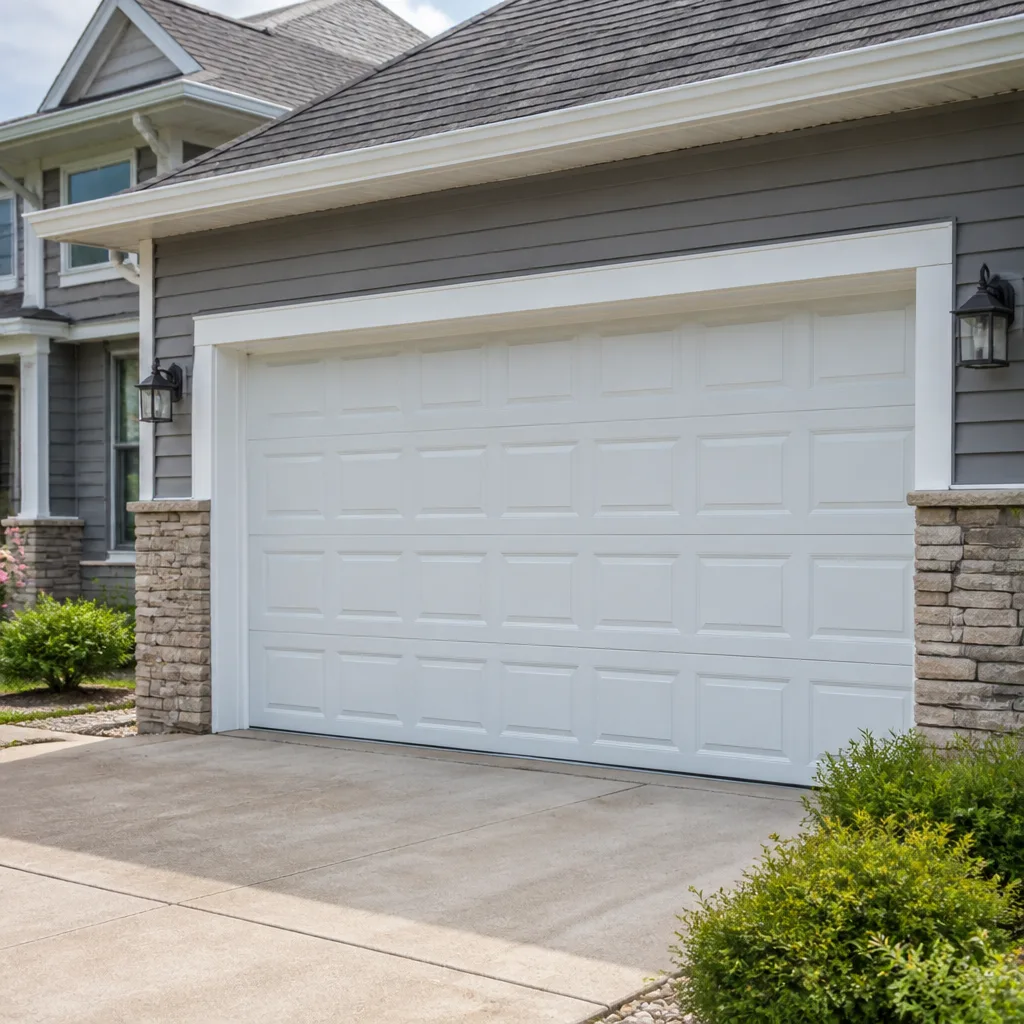 Raised-panel steel
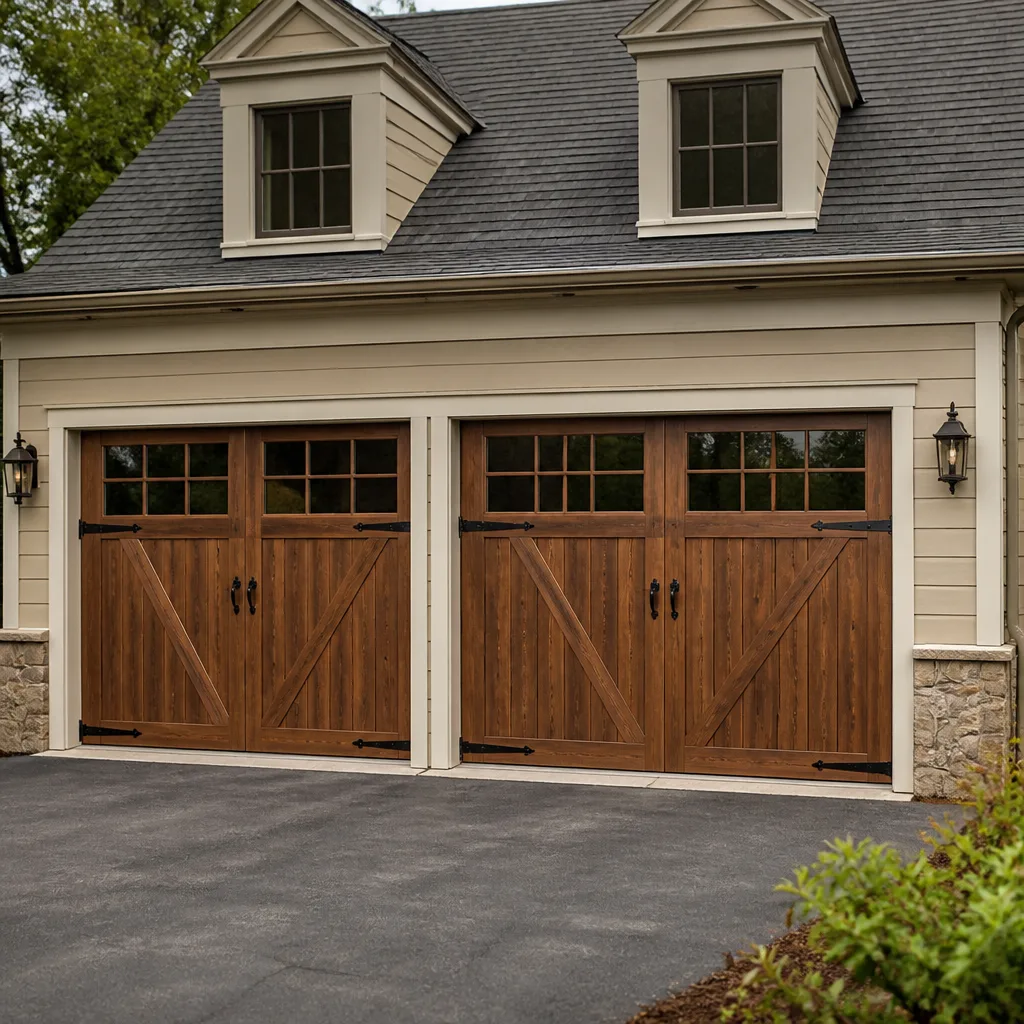 Carriage house
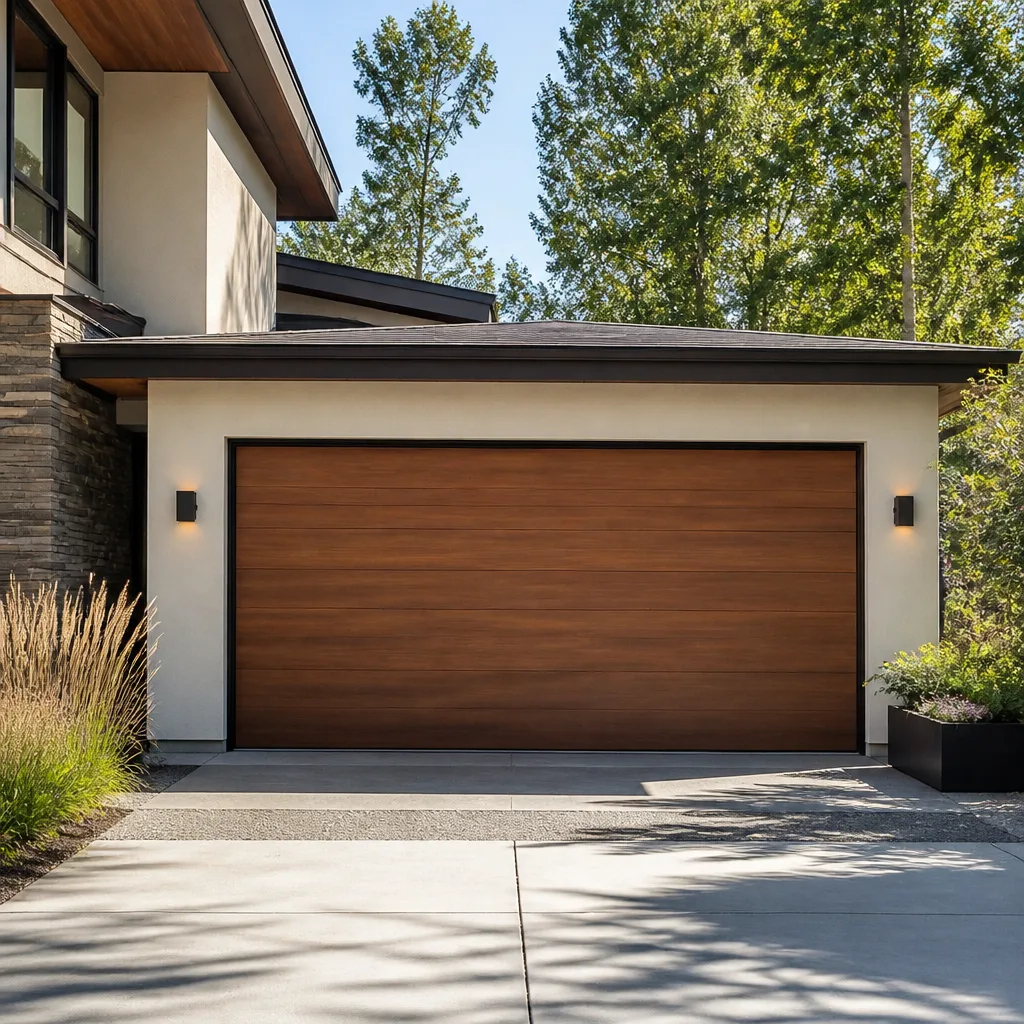 Modern flush
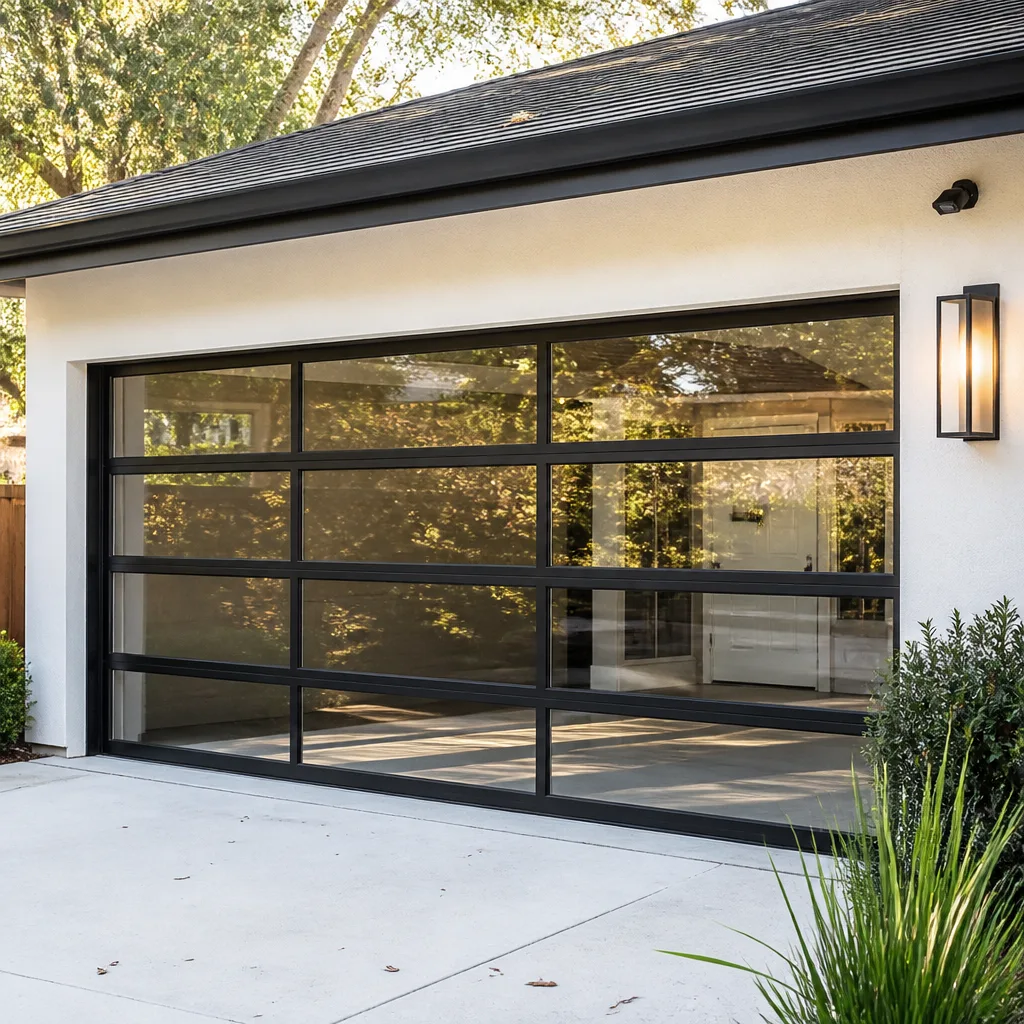 Full-view glass
 LiftMaster openers
 Chamberlain openers
Full 25-point door and opener safety check with every visit - springs, cables, rollers, tracks, and your LiftMaster or Chamberlain opener included
You get a price before we start. It does not change when the pro arrives.
Get your free estimateGarage Door Warning Signs: A Fishers Homeowner’s Reference Guide
A garage door that runs “a little slow” and a garage door with a failing torsion spring can sound almost identical from inside the house. Most homeowners file both under minor annoyance and move on with their morning. Then one of them drops. The difference between the two isn’t volume or drama; it’s which component is complaining and whether that component is on its way out quietly or loudly. This guide translates what your door is telling you into what’s actually wrong, so you know whether you’re looking at a small hardware swap or a serious repair before anyone touches a tool. We’ll walk through the ten signs we check most often in Fishers, separate door problems from opener problems, and flag the handful of symptoms that mean stop using it today.
Quick Answer
The most common garage door warning signs in Fishers are unusual noise (grinding, popping, or a bang), slowing travel speed, uneven movement or a door that drifts back down after opening, visible gaps at the bottom or sides, and a photo-eye or opener that stops responding. Any bang from the spring area, a door hanging crooked, or a cable that looks slack means stop using the door and call a specialist. The rest usually allow a short window of a few weeks before service becomes urgent.
Styles & brands we work with
- Raised-panel steel
- Carriage house
- Modern flush
- Full-view glass
- LiftMaster openers
- Chamberlain openers
Table of Contents
- Symptom-to-Cause Reference Table: Ten Signs and What They Usually Mean
- Door Problem or Opener Problem? How to Tell the Difference
- Why Some Warning Signs Only Show Up in Winter in Fishers
- Signs That Mean Stop Using the Door Today
- Signs You Can Watch for a Few Weeks
- What Each Noise Is Telling You
- A Seasonal Check List for Fishers Homeowners
- Why the Brand on Your Door Changes the Diagnosis
Symptom-to-Cause Reference Table: Ten Signs and What They Usually Mean
Start here if you want the short version. Below are the ten observable signs we hear about most from homeowners, mapped to the mechanical source each one usually points to. Treat these as likely causes, not verdicts; a technician still has to look at the door. But knowing the probable source stops you from panicking over a symptom that’s actually cheap to fix, or ignoring one that isn’t.
- Loud bang from above the door, door won’t open: broken torsion spring. This is the classic one-spring-failure scenario, and it’s a same-day repair, not a replacement.
- Grinding or scraping as the door moves: worn rollers, dry or bent track, or a hinge that’s pulled loose. Usually a hardware-level fix.
- Door moves slower than it used to: could be the opener’s motor straining, a binding track, or a spring that’s lost tension. Needs a look at both sides of the system.
- Door drifts back down a few inches after opening: spring tension or a limit setting that’s off. Often adjustable, sometimes a spring issue.
- Door hangs crooked, one side higher: a broken spring on one side of a pair, a snapped cable, or a roller that’s jumped the track. Stop using it.
- Visible gap at the bottom of a closed door: worn bottom seal, or a door that isn’t closing fully because of a misadjusted travel limit.
- Gap or daylight at the top corners: track out of alignment or a panel that’s shifted. Common after a bump from a car.
- Opener runs but the door doesn’t move: a broken spring, a disconnected trolley, or a stripped gear in the opener. The opener is doing its job; something downstream isn’t.
- Door reverses immediately after touching the floor: photo-eye misalignment, a limit switch, or something obstructing the safety sensor.
- Remote works only up close: battery, antenna, or a logic board issue in the opener. Usually a small part, rarely the whole unit.
Notice how many of these could be either the door or the opener. That overlap is the single biggest source of confusion for homeowners, and it’s why the next section matters. We handle garage door repair and opener work as separate disciplines for exactly this reason. If a chain-driven LiftMaster and a belt-driven Chamberlain both present with “door won’t open,” the diagnosis path is the same but the parts and the fix differ. Our technicians have up to 8 years of experience reading these signs, and the pattern-matching is faster than it looks.
Door Problem or Opener Problem? How to Tell the Difference
Here’s the rule that saves homeowners the most money and time: the door is the heavy part, the opener is the motor. If the motor runs and nothing happens, the problem is usually in the door. If the door is fine but the motor won’t start, hesitate, or respond, the problem is in the opener. Two completely different service calls, two different parts lists, and sometimes two different specialists.
Run this check before you call anyone:
- Pull the emergency release. With the door closed, pull the red handle to disconnect the opener from the door. Now lift the door by hand.
- If the door is heavy or won’t stay up: the springs, cables, or track are the problem. The opener is likely fine. Do not force it.
- If the door lifts easily and balances: the door and springs are healthy. The problem is in the opener, the sensors, or the wiring.
- Reconnect and test the wall button. If the opener hums but doesn’t move the door, the drive gear or trolley is suspect. If it’s silent, check the breaker and the wall control.
One caution before that step three: if you feel or hear anything binding while lifting by hand, stop and put the door back down. Garage doors are the heaviest moving object in most homes, and the springs that counterbalance them are under extreme tension. We don’t recommend homeowners adjust, remove, or inspect springs or cables directly. That’s a job for a trained technician with the right winding bars, full stop.
In our experience around Fishers, this disconnect test catches about the right diagnosis without a service call in most cases, which is useful when you’re deciding whether you’re looking at a $30 part or a $400 repair. That said, if the door feels even slightly off while you’re lifting it, the test has done its job. Stop there and call. We answer garage door opener repair questions with the same depth as door questions because the two are so often confused, and a Genie or Chamberlain unit that’s actually fine shouldn’t get replaced because a spring was the real culprit.
Why Some Warning Signs Only Show Up in Winter in Fishers
If your garage door acts up in January and February but seems fine by April, you’re not imagining it. Central Indiana winters put the door through a specific set of conditions: temperature swings that contract metal, frost and condensation that find their way into every moving joint, and the freeze-thaw cycle that works on track alignment and door seals. Some symptoms are genuinely seasonal. Others are seasonal appearances of a problem that was always there.
The seasonal signs are usually obvious:
- Grinding or squealing that starts in the cold and disappears as it warms up. Grease and lubricant thicken in low temperatures, so bearings and rollers that are only slightly worn get noisy when cold.
- A stiffer door or one that moves unevenly in the first few inches. Metal contracts slightly in the cold, and a track or spring that’s borderline will bind when the temperatures dip.
- A bottom seal that lets in cold air. Rubber seals get brittle and flatten in the cold, so the same seal that looked fine in October shows a visible gap in December.
- Photo-eyes that act up in low light or with condensation. Sun angle is low in winter in Indiana, and a sensor that’s slightly misaligned catches reflection or shadow differently than it does in summer.
The masked signs are the ones to watch for. A spring that’s lost tension, a hinge that’s pulling loose, or a roller that’s wearing flat doesn’t get better in spring. It gets quieter. Warm weather relaxes the metal and muffles the noise, but the wear is still there. That’s why a door that “self-heals” every April should still get looked at. In a Fishers subdivision where every garage faces roughly the same direction, the same seasonal symptoms show up up and down the block within weeks of each other, and most homeowners don’t connect the pattern to the season.
Our advice: if a noise or hesitation shows up in winter and disappears in spring, write it down and get it checked before the following winter. The second cold season is when the small problem becomes the expensive one.
Signs That Mean Stop Using the Door Today
Most warning signs give you time. A handful don’t. These are the ones where you park outside, leave the door alone, and call a specialist before anyone touches the button again. We’re not being dramatic here. A garage door weighs several hundred pounds, the springs lift that weight, and a failure under load can send hardware flying. The caution is earned.
Stop using the door if you see any of these:
- A loud bang followed by a door that won’t lift. That’s almost always a broken torsion spring. Do not try to lift the door by hand to get the car out. Call and let a technician manage it.
- A door hanging visibly crooked, one corner lower than the other. Broken spring, snapped cable, or a roller off the track. The door can drop the rest of the way without warning.
- A visibly slack or snapped cable. Cables are under tension when the door is up and under less when it’s down. Never touch, tug, or reattach one.
- A track that’s bent, buckled, or pulled from the wall. The door can come down on the track or off it entirely.
- A door that reverses or stalls partially down and then jams. This can be a sensor problem, but it can also be mechanical. Until you know which, don’t cycle it repeatedly.
- Grinding or scraping that’s getting louder each time you use it. Not an emergency in itself, but a sign of imminent failure. Stop using it and get it looked at.
We’d rather talk a homeowner out of one more cycle than have them find out the hard way. These are exactly the calls our technicians are dispatched for: if you’re in Fishers and one of the signs above just happened, the door stays down until someone qualified has looked at it. For everything else on this list, the next section is for you.
Signs You Can Watch for a Few Weeks
Not every warning sign needs a same-day response. Some are early signals that the door is heading toward a repair but has room to run. The reason we distinguish is simple: it lets you plan instead of react, and it stops the urgent problems from getting lost in a list of “things to check eventually.”
These signs can usually wait a few weeks, as long as they’re not getting worse:
- Squeaking or squealing without grinding. Usually a lubrication or worn-roller issue. If it changes to grinding or a metal-on-metal sound, call sooner.
- A remote that only works from close range. Battery or antenna first, opener logic second. A small part, not an imminent failure.
- A small gap at the bottom of the door. A worn seal is a comfort and efficiency issue most of the year. If it’s letting in water or pests, treat it sooner.
- One photo-eye that’s temperamental in certain light. Worth adjusting, not worth panicking over. If the door fails to reverse when tested with an object, that’s a safety item and should move up the list.
- Slight slowing of the door’s travel. If it’s gradual and the door still opens fully, it’s worth watching. If it stalls partway, it’s no longer a wait-and-see.
The distinguishing question is: “Is this symptom stable, or is it getting worse each time I use the door?” A stable symptom is a scheduled repair. A worsening one is the beginning of a breakdown. We’d rather you call with a list of “it’s been doing this for three weeks” than after something fails at 7am on a Monday with two cars trapped inside.
What Each Noise Is Telling You
Garage door noises are unusually informative. Each sound tends to point to a different component, and once you know the vocabulary you can describe the problem accurately over the phone, which often shortens the diagnostic step. Here’s the sound-to-cause map we work from:
- A sharp bang or pop from above the door, once: a torsion spring breaking. The door will feel heavy and probably won’t open past a few inches.
- Grinding, especially near the start and end of travel: rollers or bearings worn flat, or a track that’s out of alignment. Often one of the cheapest fixes on this list.
- Squealing or squeaking in short bursts: a bearing or roller that’s dry. Lubrication might solve it; sometimes the roller needs replacing.
- Rattling or banging as the door moves: loose hinges, a worn bottom bracket, or a panel that’s come slightly loose from its frame. Often a tightening job, but need to verify nothing cracked.
- A scraping sound along one side: the door is rubbing the track. This can be a bent track, a roller off its edge, or a hinge pulling away.
- A rhythmic thump or thud per revolution: a bent or worn roller, or a drum that’s out of balance. Easy to miss, but a reliable indicator.
- A whining or buzzing from the opener itself: a motor straining, worn gear, or a capacitor going. This is a different category of repair than the door.
In our experience, the “bang” is the one homeowners describe most vividly and accurately, because it’s unmistakable. Everything else tends to get summarized as “it’s making a weird noise.” If you can match the sound to one of the entries above before you call, the conversation is shorter and the visit is more targeted. We service the whole system, so whether the noise is a Clopay panel rattling in its stiles or the drive gear on a Genie opener, we’re set up for both.
A Seasonal Check List for Fishers Homeowners
Warning signs are easier to catch if you look for them on purpose. Here’s the routine we suggest for Fishers homeowners, timed to the region’s weather rather than the calendar year:
- Before the first hard freeze (late fall): test the door’s balance by hand (release the opener and lift to waist height; a healthy door should stay roughly put). Check the bottom seal for brittle rubber. Listen for grinding that wasn’t there in September.
- Mid-winter, after a cold snap: listen for new noises that appeared in the cold. Recheck the photo-eyes; low winter sun and condensation are common culprits. Look for condensation or frost on the tracks or panels.
- Spring thaw: look for gaps that opened up in the cold and didn’t close. Check for water intrusion under the door. Listen for the “quiet” that comes with warm weather, and don’t assume it means the wear went away.
- Before summer heat: lubricate the rollers, hinges, and tracks with a garage-door-appropriate lubricant. Check that the door reverses when it meets an object on the way down.
- Once a quarter: test the safety reverse with a roll of paper towels or a 2×4 laid flat under the door. It should reverse on contact. If it doesn’t, get it looked at promptly.
This list takes maybe five minutes each time. It won’t catch everything, but it catches enough that the catastrophic failures get rarer. There’s no permit or code requirement involved in a routine garage door check in Fishers; it’s a maintenance habit, not an inspection. For anything that fails during this routine, the Fishers service area is where our technicians are dispatched to help.
Why the Brand on Your Door Changes the Diagnosis
A garage door isn’t a single machine; it’s a system made by at least two, and sometimes three, manufacturers. The door itself might be a Raynor or an Amarr, the opener might be a LiftMaster or Chamberlain, and the springs, rollers, and hinges might be supplier hardware from a completely different source. Diagnosis depends on knowing which is which, and repair depends on having the right parts.
Here’s why it matters practically:
- Opener diagnostics differ by brand. LiftMaster and Chamberlain units share a lot of logic, while Genie and Craftsman use different travel limits and force settings. A “door reverses immediately” symptom gets checked differently on a Genie than on a LiftMaster.
- Door panel hardware isn’t universal. A hinge from a Raynor door won’t necessarily fit a Clopay panel, and the difference affects whether a repair is a few dollars in parts or a wait for the correct one.
- Springs and cables are matched to the door. Wire gauge, length, and tension are specified by the door’s weight and size, not interchangeable.
- Safety sensor wiring differs across brands. A photo-eye issue on one opener is often a wiring problem on another.
We work on the eight major manufacturers – LiftMaster, Chamberlain, Genie, Craftsman, Clopay, Amarr, Wayne Dalton, and Raynor – which means when a homeowner tells us what they have, we can typically go straight to the right diagnostic path. The alternative is a generalist who treats every door and opener as a generic system and has to do extra work to figure out which parts are appropriate. For a homeowner, brand familiarity on the technician’s side is the difference between one visit and three.
Common Mistakes to Avoid
- Lifting a door by hand to get the car out after a spring breaks. The door is much heavier than it feels held by the opener, and a panel can drop. Leave it closed and call.
- Greasing the springs. This is the one part of the system where lubrication can trap grit and accelerate wear, and it’s the part under the most tension. Don’t touch it.
- Ignoring a “self-healing” winter symptom. A noise that disappears in spring hasn’t gone away; the wear is quieter in warm weather. Note it and get it checked before next winter.
- Repeatedly resetting the opener without checking the door. If the door isn’t moving, the opener isn’t the problem nine times out of ten. Cycling the opener just wears it out along with the door.
- Replacing the opener when the door is the problem. We see this most with older systems; the motor is fine but the springs are tired. The right answer is a door repair, not a new opener.
- Treating a crooked door as cosmetic. A door hanging unevenly means one side of the spring or cable system has failed. It can drop the rest of the way without warning.
- Not testing the safety reverse. A door that doesn’t reverse on contact isn’t just non-compliant with the intent of modern safety standards; it’s a hazard in a garage where kids and pets are present. Test it quarterly.
See the difference
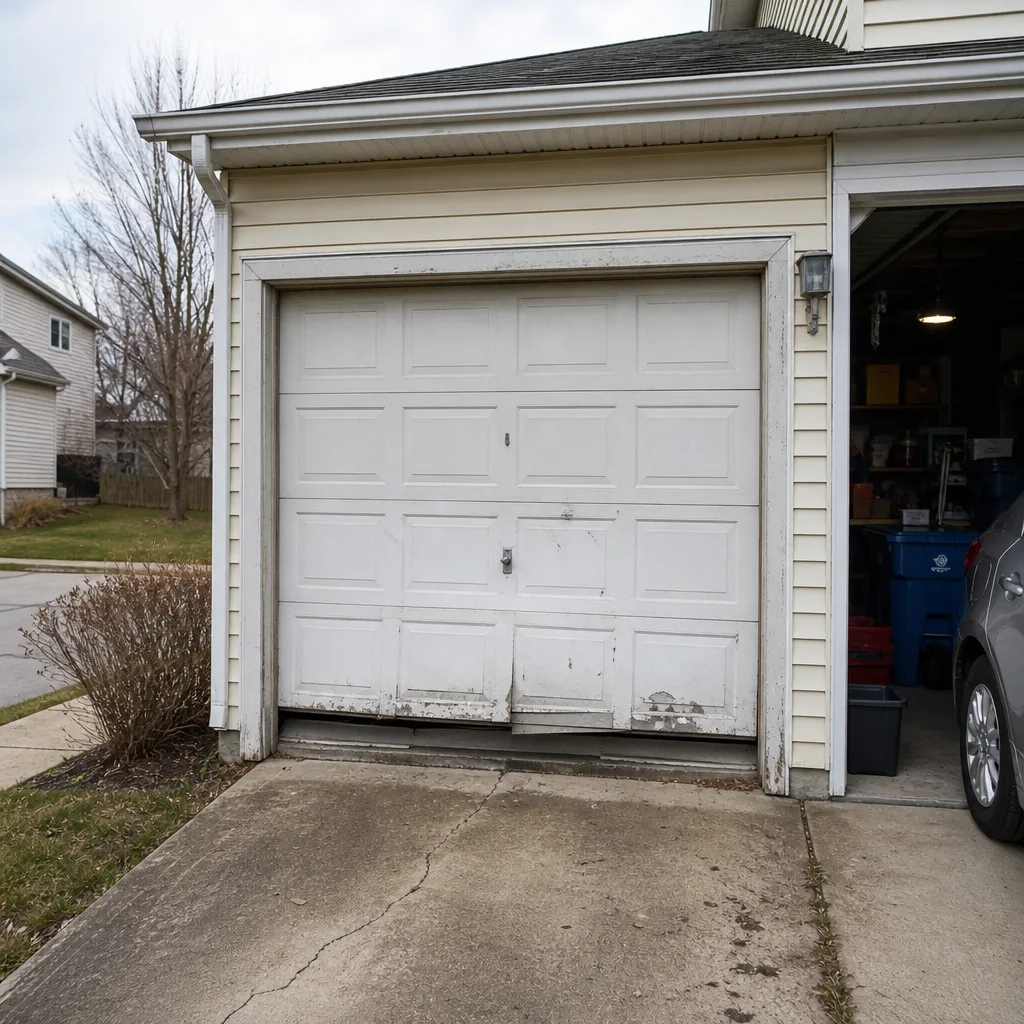 Before
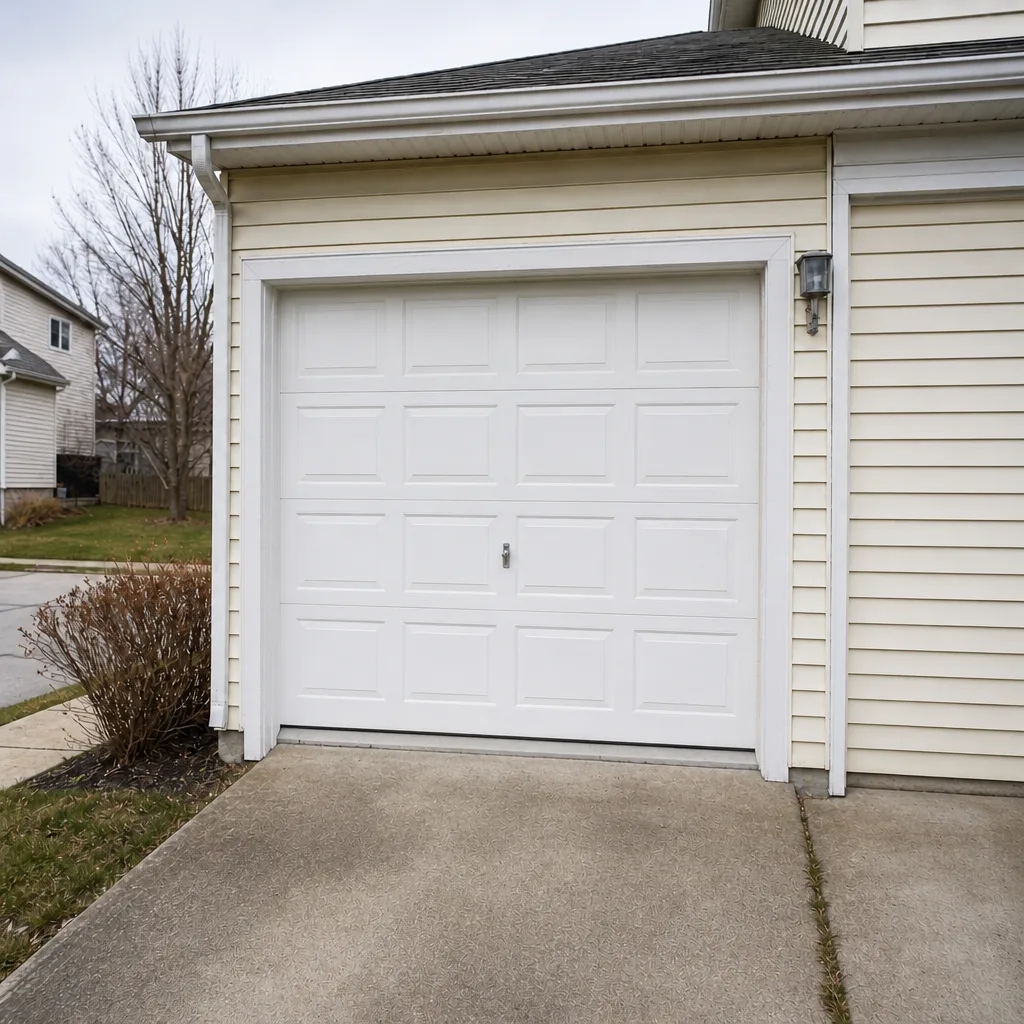 After
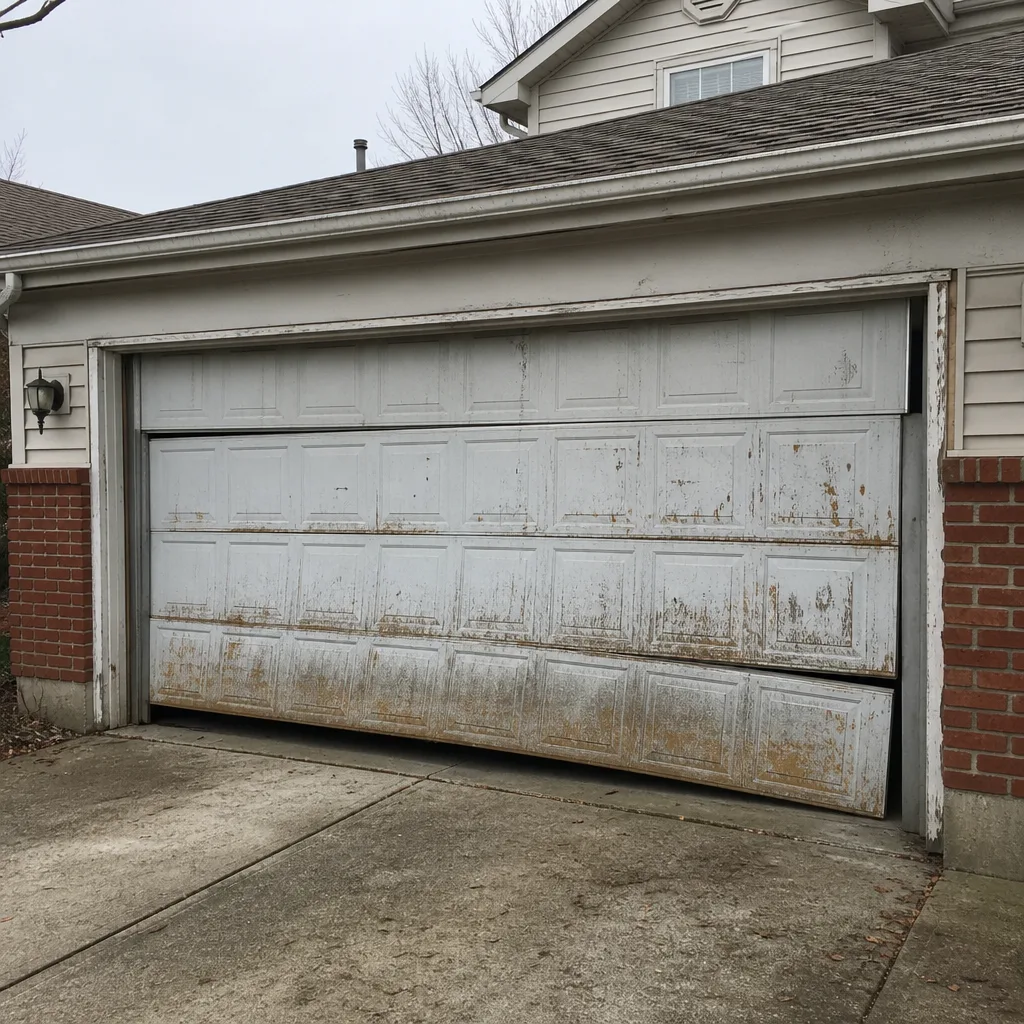 Before
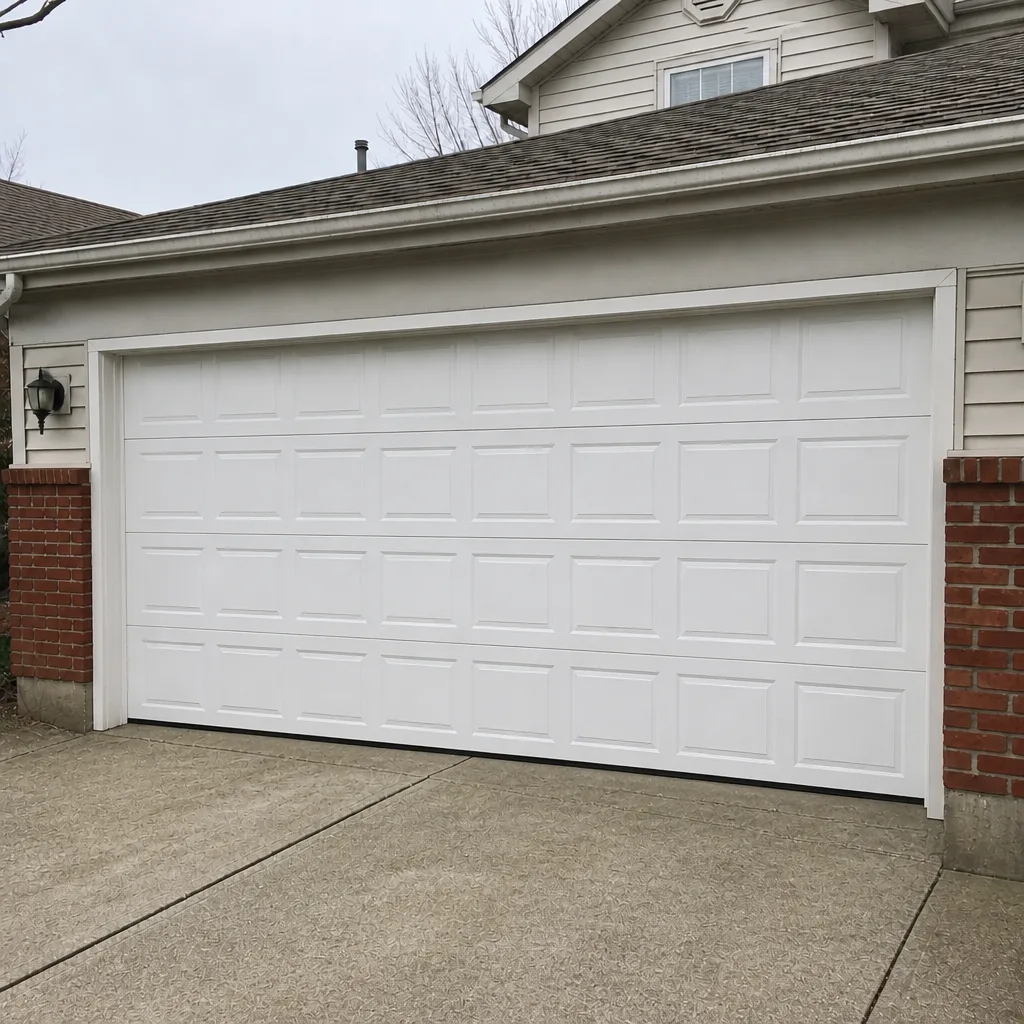 After
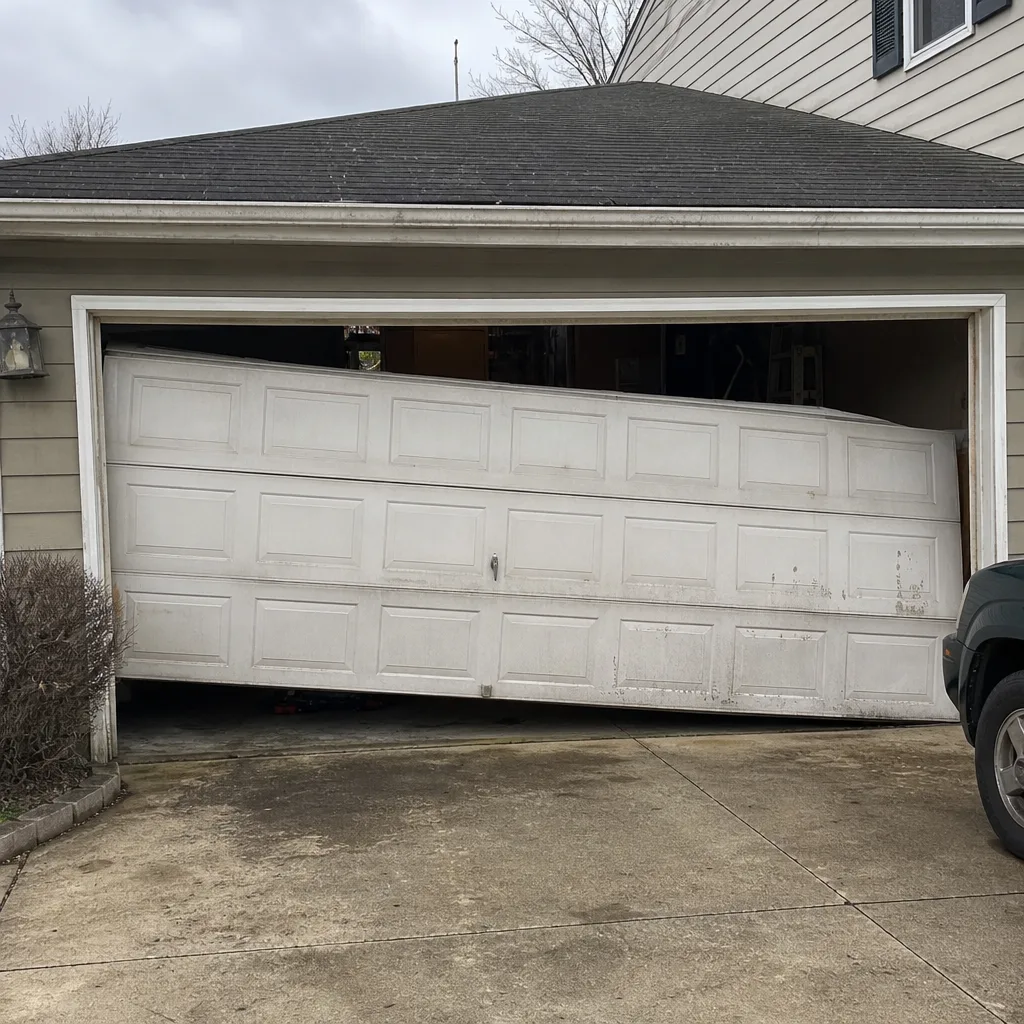 Before
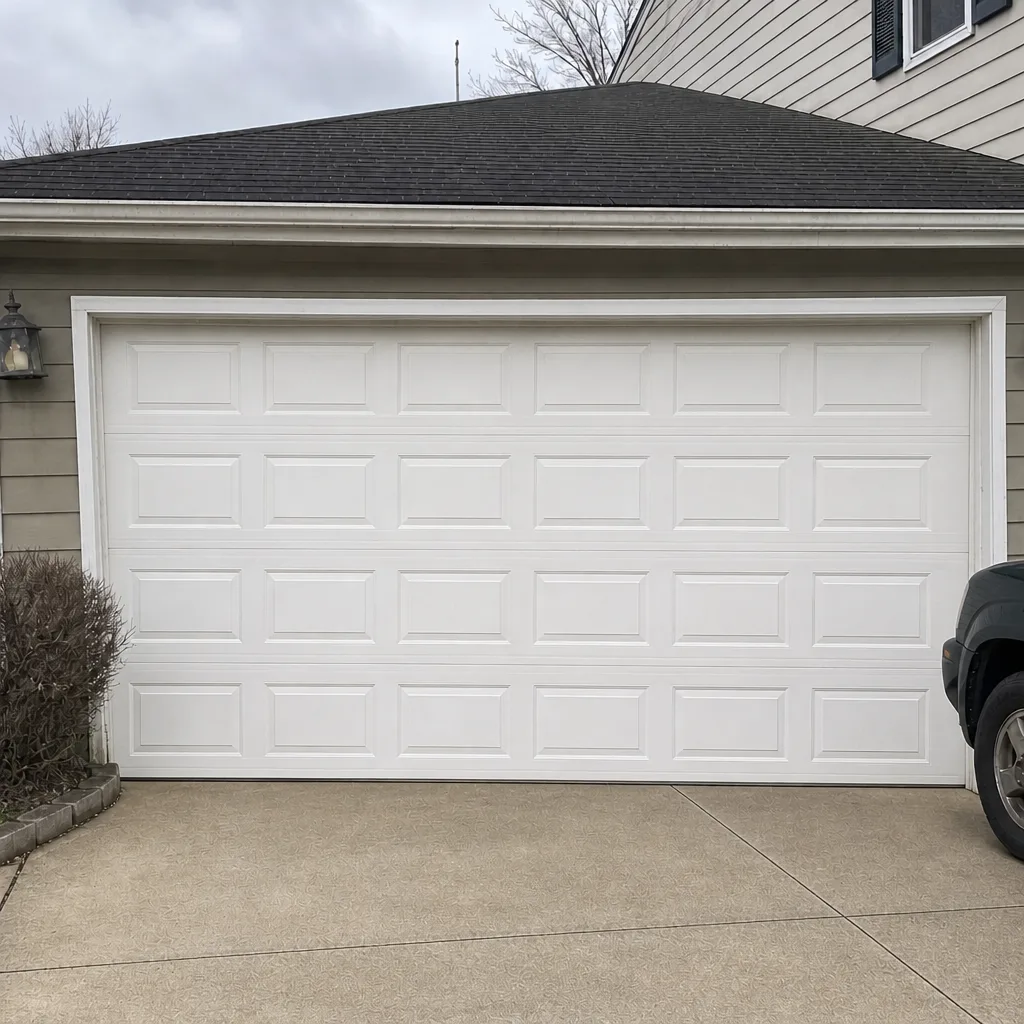 After
When to Call a Professional
Call a specialist when you hear the bang of a broken spring, see a door hanging crooked, notice a slack or snapped cable, find a track that’s bent or pulled away from the wall, or watch a door that reverses or stalls partway down and won’t repeat the same behavior twice. Call if the door grinds or scrapes with every cycle, if the opener runs but the door doesn’t, or if a symptom has shifted from “occasionally” to “every time.” These are signs the system has moved from a maintained state to a compromised one. Hillcrest Garage Door Service offers free estimates in Fishers; call (866) 810-7496 to schedule. We answer 24/7, and our technicians are dispatched fast, from 7am to 7pm, Sunday through Friday.
Frequently Asked Questions
The most common signs are unusual noise (grinding, popping, or a single loud bang), a door that moves slower or unevenly, a visible gap at the bottom or top, a door that drifts down after opening, and an opener or remote that stops responding. In Fishers, we also see a cluster of winter-only symptoms tied to cold weather and contraction, which often disappear in spring without the underlying problem being fixed. Call (866) 810-7496 for an exact quote; estimates are free.
Pull the emergency release and lift the door by hand. If it’s heavy or won’t stay up, the problem is in the door’s springs, cables, or track. If it lifts easily and balances, the problem is in the opener, sensors, or wiring. Stop if you feel any binding. Our specialists work on both sides of the system, so whichever it turns out to be, one call covers the diagnosis and the repair.
Stop using the door if you hear a bang and the door won’t lift, if the door hangs crooked with one corner lower, if you see a slack or snapped cable, if the track is bent or pulled from the wall, or if the door stalls and jams repeatedly. These indicate spring, cable, or structural problems that can fail unpredictably. Call (866) 810-7496; we answer 24/7 and dispatch fast from 7am to 7pm, Sunday through Friday.
Cold temperature thickens lubricant, contracts metal, and stiffens seals, so a door that’s slightly worn gets noisy in winter and quiet in spring. The problem is masked, not solved; the wear is still there when the weather warms. Write down the winter symptoms and get the door checked before the next cold season so they don’t compound.
You can safely check the balance by hand, test the safety reverse, clean and lubricate the rollers and hinges, and replace remote batteries. You should not adjust springs, cables, or the opener’s force and limit settings; those are under extreme tension and are the most common source of serious injury in garage door work. When in doubt, have a specialist look at it.
No. The written estimate sets the price, and you get it before work starts. We look at the door and opener, identify the actual cause, and quote the repair; the number you agree to is the number you pay for that scope. If the inspection turns up something else entirely, we discuss it and you decide before anything proceeds. Call (866) 810-7496 for an exact quote; estimates are free.
The Bottom Line
Most garage door warning signs are translated wrong by homeowners, not missed. A short grind gets filed under “old door,” a winter squeal becomes “it’ll pass,” and a crooked door gets shrugged off because the car still gets out. Each of those signs points to a specific component, and knowing which one tells you whether you’re facing a small hardware fix or a serious repair. The signs that mean stop using the door – the bang, the crooked hang, the slack cable, the bent track – are short and clear, and they’re the reason a specialist should see the system before it fails under load. If you’re in Fishers and something on this list sounds familiar, get it checked and get it working right.
Hillcrest Garage Door Service is a garage door specialist, not a general home services company. Every technician hour, every part we keep, and every diagnostic we run is pointed at one system: the door and the drive mechanism. If you’re not sure what your door is telling you, call (866) 810-7496 for a free estimate. We answer 24/7, and fast dispatch from 7am to 7pm runs Sunday through Friday.
Written by the team at Hillcrest Garage Door Service.