
Last updated November 15, 2026
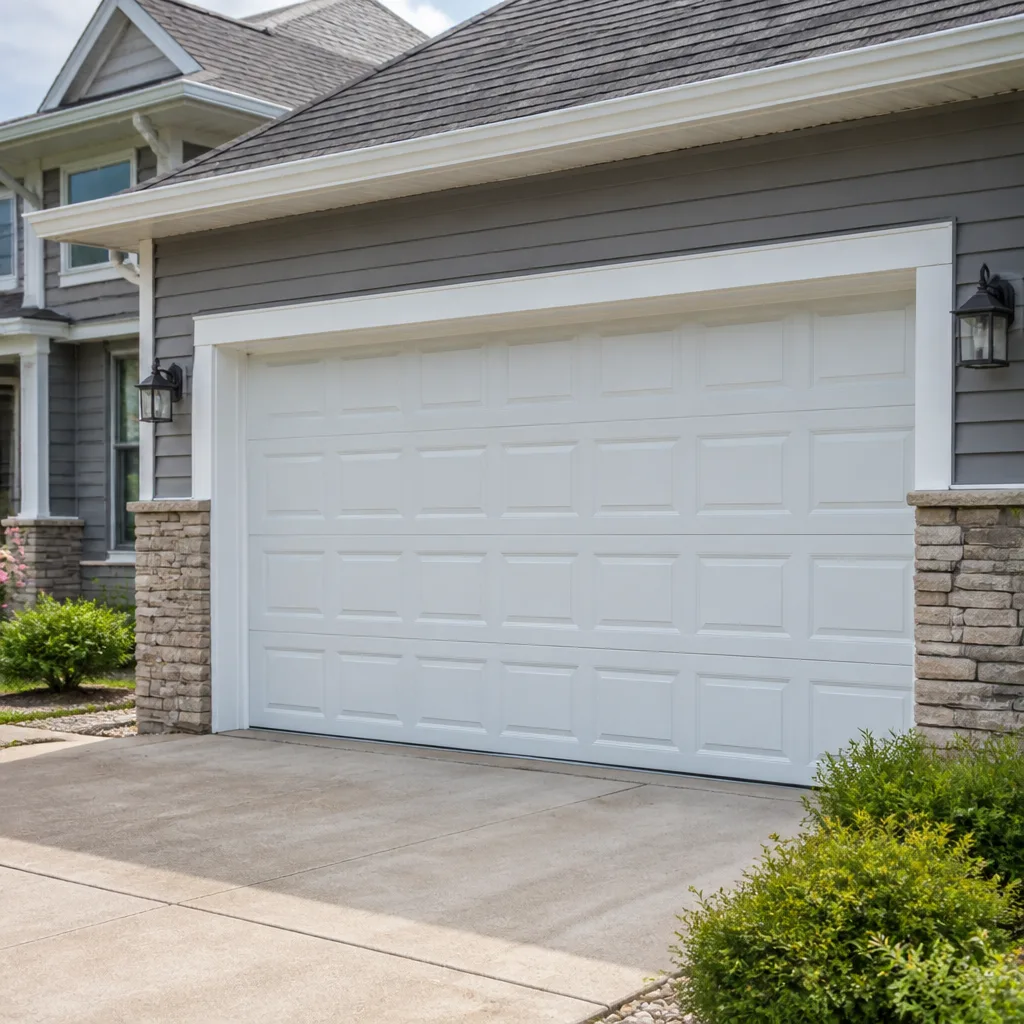 Raised-panel steel
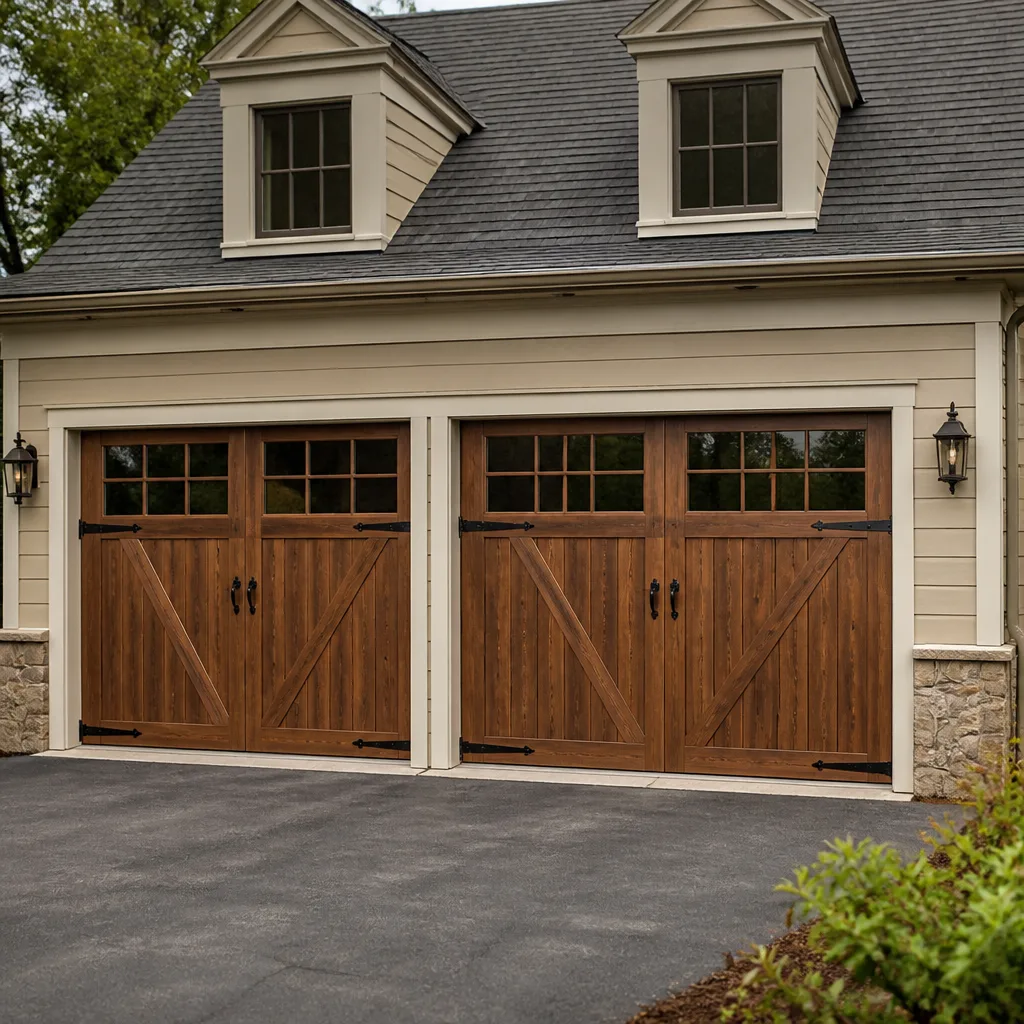 Carriage house
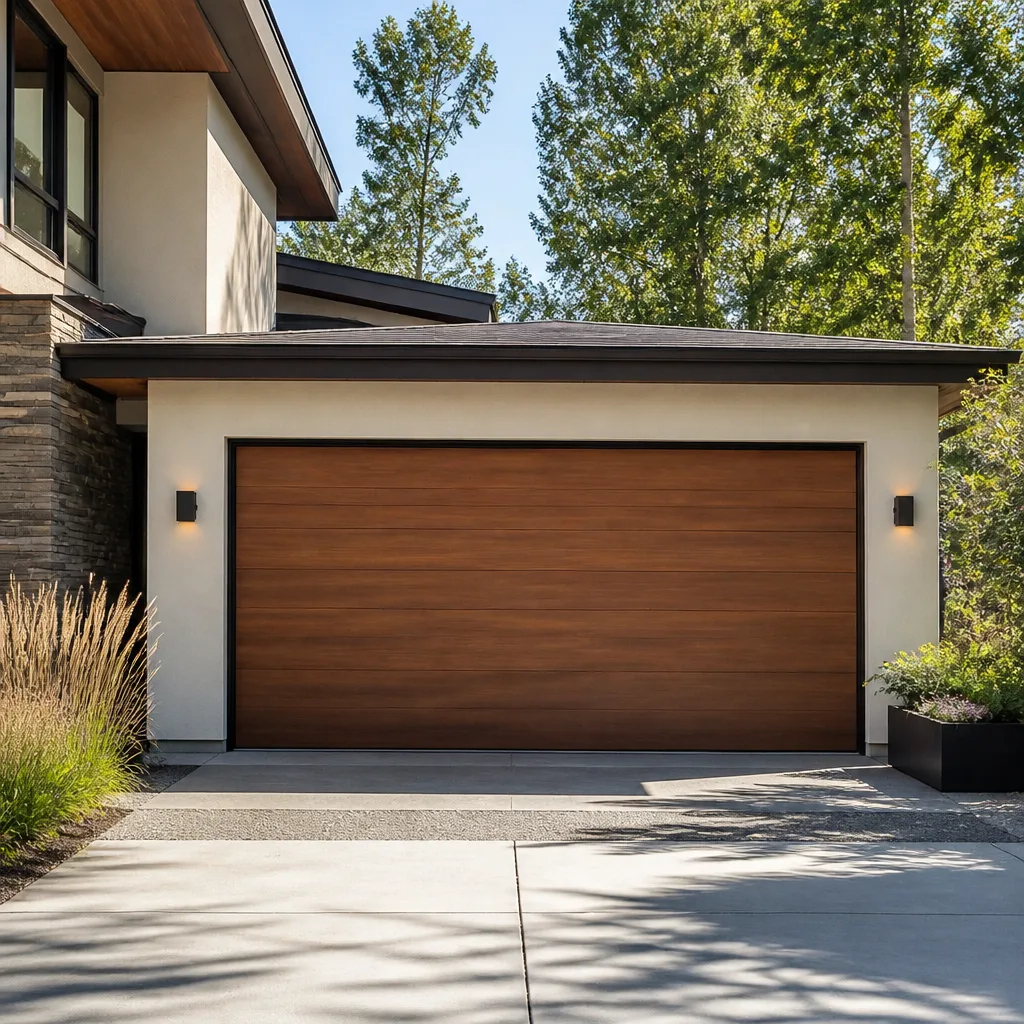 Modern flush
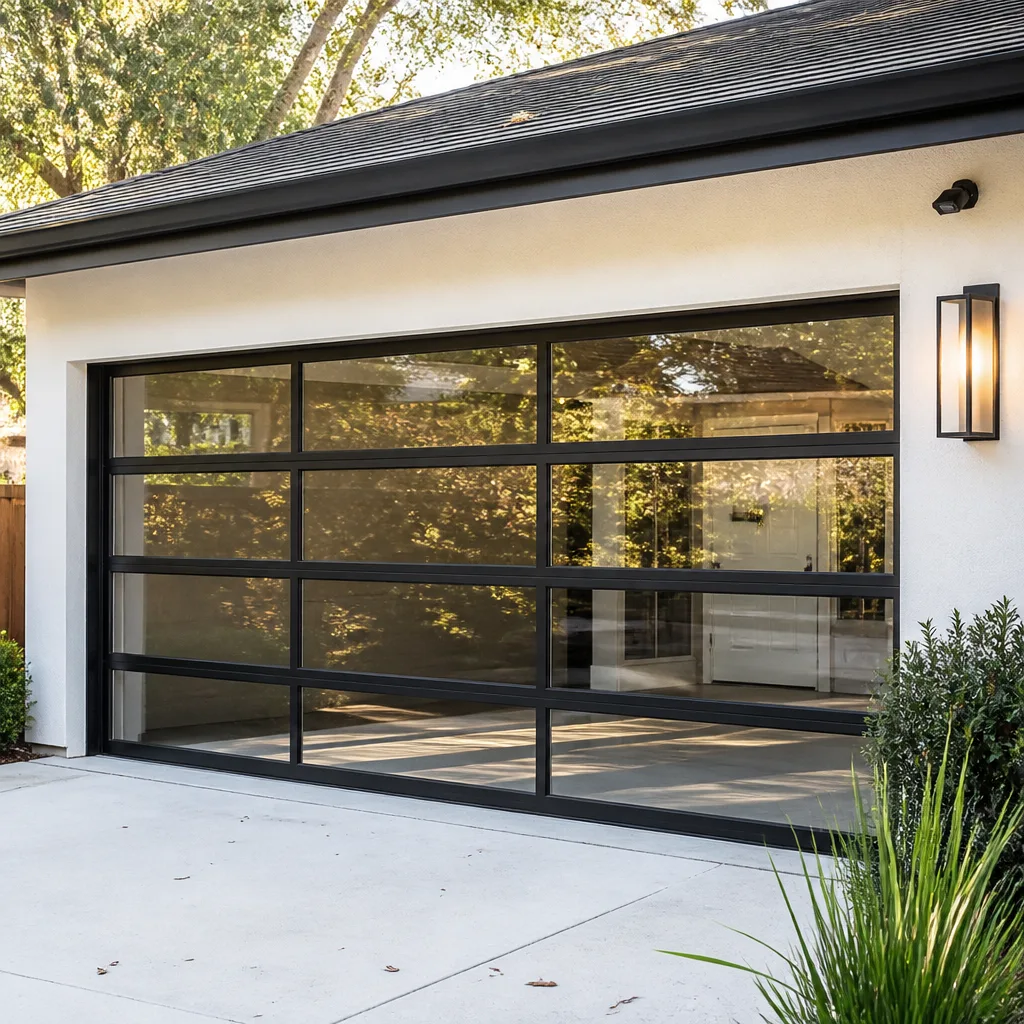 Full-view glass
 LiftMaster openers
 Chamberlain openers
Full 25-point door and opener safety check with every visit - springs, cables, rollers, tracks, and your LiftMaster or Chamberlain opener included
You get a price before we start. It does not change when the pro arrives.
Get your free estimateThe Complete Guide to Garage Doors in Fishers
Most Fishers homeowners spend more time choosing a ceiling fan than choosing a garage door, then wonder why the door they bought five years ago already needs replacing. The pattern repeats because the decisions that matter most happen before anything gets installed: material, insulation, opener type, and the way the garage itself sits on the lot. Get those right and a door can last a long time here. Get them wrong and every spring repair, every winter rattle, and every faded panel traces back to that first choice. This guide walks through each decision in the order it actually matters, mapped to the conditions Fishers homes really face.
Quick Answer
The right garage door for a Fishers home usually comes down to three decisions: a steel or composite door rated for real insulation, an opener matched to the door’s weight and the garage’s orientation, and a style that clears your subdivision’s architectural guidelines before you order. Most of the frustration we see comes from skipping one of those three. Do all three and you’ll get a door that handles the temperature swings here without needing replacement in a few years.
Styles & brands we work with
- Raised-panel steel
- Carriage house
- Modern flush
- Full-view glass
- LiftMaster openers
- Chamberlain openers
Table of Contents
- How Fishers’ Climate Changes What Door You Need
- Which Garage Door Materials Hold Up in Fishers
- HOA Rules in Fishers Subdivisions: Check Before You Shop
- Why Your Garage’s Orientation Matters
- How Long Each Door Type Actually Lasts
- Choosing the Right Opener for Your Door
- Repair or Replace: How We Decide
- Common Mistakes to Avoid
- When to Call a Professional
- Frequently Asked Questions
How Fishers’ Climate Changes What Door You Need
Fishers sees sub-zero stretches in January and 90°F afternoons in July, sometimes in the same calendar year with little warning in between. That range is the single biggest driver of what kind of garage door works here. A door rated to national insulation averages is generally under-specified for Indiana, because the extremes are wider and the daily swings are sharper. Panels expand and contract more, seals wear faster, and an uninsulated door makes the garage hold cold in winter and heat in summer.
Insulation R-value is the number that captures all of this. The higher it is, the better the door resists heat transfer, and the more stable the garage temperature stays. That matters for two reasons. First, garages that share a wall with a living space pull that temperature into the house. Second, an insulated garage stays above freezing more reliably in winter, which protects anything stored there and reduces the condensation that rusts hinges and tracks.
In practice, we recommend a door with a genuine insulation layer rather than a single-panel shell for nearly every Fishers home. That includes the double-layer steel options from brands like Clopay and Amarr that use a sandwich construction. Our technicians have up to 8 years of experience, and most of the garage door repair calls we take to Fishers in mid-winter trace back to a door that was ordered without enough insulation or a seal that hardened during the cold snaps.
- Sub-zero winters stiffen seals and put stress on springs and hinges. Insulated doors reduce the swing inside the garage.
- Humid summers rust uncoated steel tracks and speed up seal degradation.
- Wild daily swings stress the panel joints on single-layer doors more than on solid insulated ones.
Which Garage Door Materials Hold Up in Fishers
Indiana’s humidity is the quiet enemy of a garage door. Panels that get wet and stay wet, whether from a humid July or a driveway that traps morning dew, will fade, peel, or rust depending on the material. The road salt tracked onto driveways from Hamilton County roads is the second factor: salt spray that gets onto the bottom section of a steel door, or onto the hardware on a driveway-facing door, shortens the life of the finish. Material choice should be made with both in mind.
Here’s how the main materials actually perform in this climate:
- Insulated steel: The most common door in Fishers, and for good reason. It resists dents, holds insulation well, and stays looking clean if it’s washed once or twice a year. Rust at the bottom edge from road salt is the main failure point.
- Composite: Heavier than steel, with a faux wood grain. It doesn’t rust, which is a genuine advantage with salt exposure, but it’s more expensive and the price reflects the material.
- Wood: Beautiful, but Indiana’s humidity wants regular refinishing or it will crack. The right choice for a rare few homes and the wrong choice for most.
- Aluminum: Lighter and rust-resistant but prone to dents, and it needs more insulation behind it to handle Fishers winters.
- Fiberglass: Won’t dent or rust, but it cracks in cold and doesn’t insulate well without a separate insert.
In our experience, insulated steel with a factory finish is the front-runner for most homes here. Brands like Wayne Dalton and Amarr make steel doors in finishes that shrug off salt and humidity better than the builder-grade panels that came with a lot of new construction in Fishers.
HOA Rules in Fishers Subdivisions: Check Before You Shop
A lot of Fishers homes sit inside planned subdivisions with architectural review requirements, and the rule sets vary between communities. Saxony, Thorpe Creek, and the other major Fishers neighborhoods each have their own architectural guidelines governing door style, color, window configuration, and sometimes panel material. Shopper after shopper has told us they loved a door online, then discovered it wasn’t allowed after they’d already ordered it.
Before you look at doors, get the architectural guidelines in writing. Most HOAs will provide them on request, and the review process usually moves faster if you submit a door spec sheet along with your request. A few things the guidelines almost always cover:
- Approved colors, often limited to a palette matching the rest of the community.
- Panel style, including whether carriage-house or raised-panel designs are permitted.
- Window or glazing options and placement.
- Material restrictions (some communities disallow wood or unfinished surfaces).
- Whether a door must match the front entry of the house.
When we help a Fishers homeowner select a new door, the architectural guidelines are the first thing we ask to see. It saves weeks and a lot of frustration. If your subdivision has a design committee, get the approval before buying, and if the community doesn’t have an HOA, still check with the Fishers building department on permit requirements before installation begins.
Why Your Garage’s Orientation Matters
Two garages on the same Fishers street don’t face the same conditions. A north-facing garage gets the least sun of any orientation, which sounds like a good thing and mostly isn’t. The face of the door stays in shade, so morning condensation doesn’t burn off, and winter ice on the door can persist for days. A south-facing garage faces the opposite problem: the door absorbs direct sun all day in summer, and the finish takes a beating from UV exposure. The heat build-up behind that door is real, and it’s the reason south-facing garages feel like ovens in July.
Orientation changes the recommendations in a few specific ways:
- North-facing: prioritize weather seals and drainage at the base of the door. A good bottom seal keeps snowmelt out, and the right finish helps with the persistent shade.
- South-facing: prioritize a finish with real UV resistance and insulation that blocks solar heat. A light color reduces heat absorption where the HOA allows it.
- East and west: half-day sun and half-day shade, which is generally the friendliest orientation for door finish and seal life.
Opener choice ties in too. A door that gets heavy solar load is often a door that’s under more thermal stress, so the opener has to lift it smoothly. If the panels are binding or the door feels heavier than it should, it’s worth having a technician check the balance before assuming the opener is at fault. That’s the kind of problem our garage door repair side handles routinely.
How Long Each Door Type Actually Lasts
Manufacturer marketing numbers tell one story; the Midwest weather tells another. The lifespans below are what we see in practice for doors in Fishers conditions, accounting for humidity, salt exposure, and temperature swings. They assume basic maintenance like annual wash-down and lubrication:
- Insulated steel: 15 to 20 years when the finish is maintained. Rust at the bottom edge is usually what ends the run, not the panels themselves.
- Composite: 20 to 25 years, since there’s no rust and the finish holds very well. The trade-off is a higher initial cost.
- Wood: 10 to 15 years with regular painting or staining, sometimes less if it’s neglected. Humidity punishes a wood door faster than any other material.
- Aluminum: 15 to 20 years but with more visible denting along the way. Dent repair becomes part of the routine.
- Fiberglass: 12 to 18 years. The finish is the weakest point, and small cracks in cold weather are common.
- Builder-grade steel with no insulation: 8 to 12 years. This is the door you see needing replacement on newer homes in Fishers, and it’s a big reason the whole conversation about insulation matters.
Springs, rollers, hinges, and cables wear out faster than the door itself, typically every several years. Spring lifespan is heavily influenced by cycle count rather than calendar time, so a high-traffic two-car garage in Fishers will run through springs faster than a single-car garage that’s opened twice a day.
Choosing the Right Opener for Your Door
Openers and doors are separate decisions, and most homeowners who end up unhappy have mismatched them. A heavy insulated door paired with an underpowered opener will strain the motor and shorten its life. A lightweight door with a heavy-duty opener is overkill. The right match takes into account the door’s weight, the cycle frequency, and whether the garage has smart controls or just a basic remote.
Here’s the sequence we use when pairing an opener to a new door:
- Measure door weight. Door weight determines the minimum opener strength. Belt-drive models handle most residential doors quietly; chain-drive models hold up longer under heavy doors but run louder.
- Check the existing opener’s brand and platform. LiftMaster, Chamberlain, Genie, and Craftsman each have their own control wiring and safety sensor layout. The opener should match the door rather than be forced to work with what’s already installed.
- Confirm the safety reverse system. Every opener needs functioning photo-eye sensors and a working force reverse. We check both every time we service an opener.
- Match controls to the household. Wi-Fi, keypad, and smartphone controls are options, not requirements. A basic remote setup is fine if nobody asks for smart features.
Brand familiarity matters more than homeowners expect. A Clopay door might come with an opener already spec’d by the builder, and a Wayne Dalton or Amarr door could currently be running LiftMaster or Genie controls. If you’re not sure what you’ve got, a technician can identify it in minutes. Our garage door opener repair team works on all four major opener brands and can tell you whether your current unit is worth repairing or replacing.
Repair or Replace: How We Decide
The repair-or-replace question is the one homeowners ask most, and it’s usually simpler than it feels. The rule of thumb: if the repair costs more than a third of a new door and the door is past the halfway point of its expected lifespan, replacement is worth a serious look. Below that threshold, repair is almost always the better call. But every garage door is different, so we walk through the full picture.
A few scenarios push toward repair:
- A single broken spring on an otherwise solid door. Springs are routine.
- An opener that’s stopped working while the door itself is fine.
- A damaged bottom section that can be replaced on its own.
- An opener remote or safety sensor that’s stopped responding.
- A panel that’s been dented but the finish and insulation are intact.
And a few push toward replacement:
- Rust creeping across more than one section, especially with salt exposure.
- Multiple spring repairs in a row on a door that’s past 15 years old.
- The door is binding on its track in a way that’s bending panels.
- Insulation is failing and the garage is warmer or colder than the house.
- The door style now conflicts with your HOA’s current guidelines.
An honest answer on repair vs. replace involves looking at the whole door and the whole opener. That’s what Hillcrest Garage Door Service is set up to do, and it’s why we ask so many questions before quoting anything.
See the difference
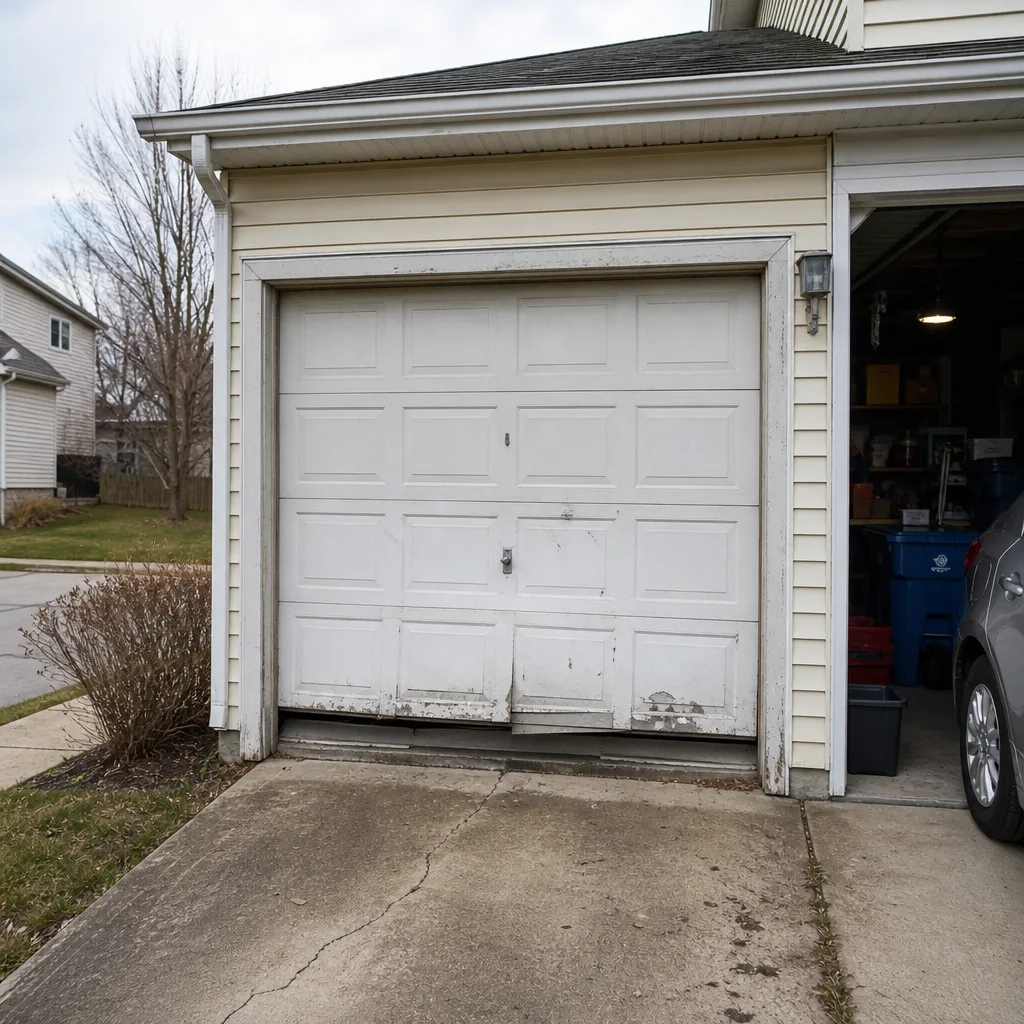 Before
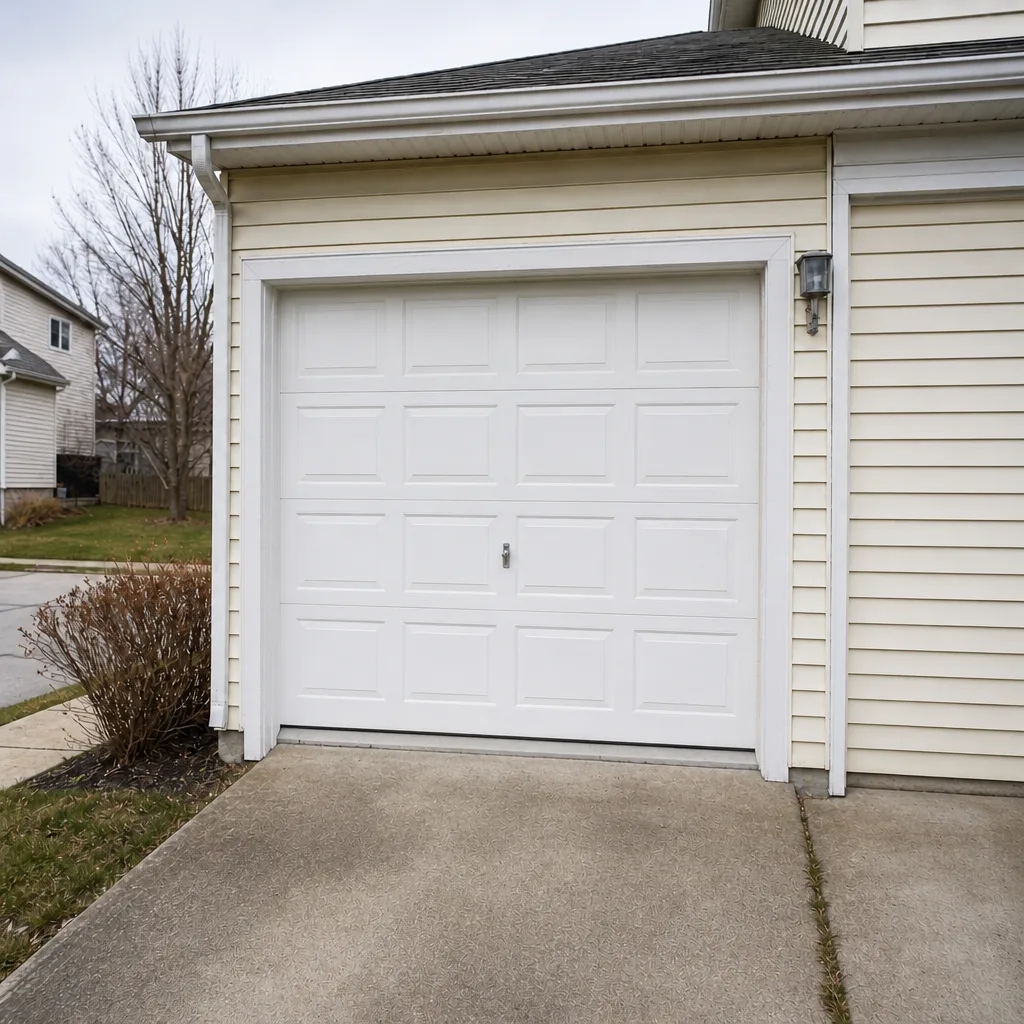 After
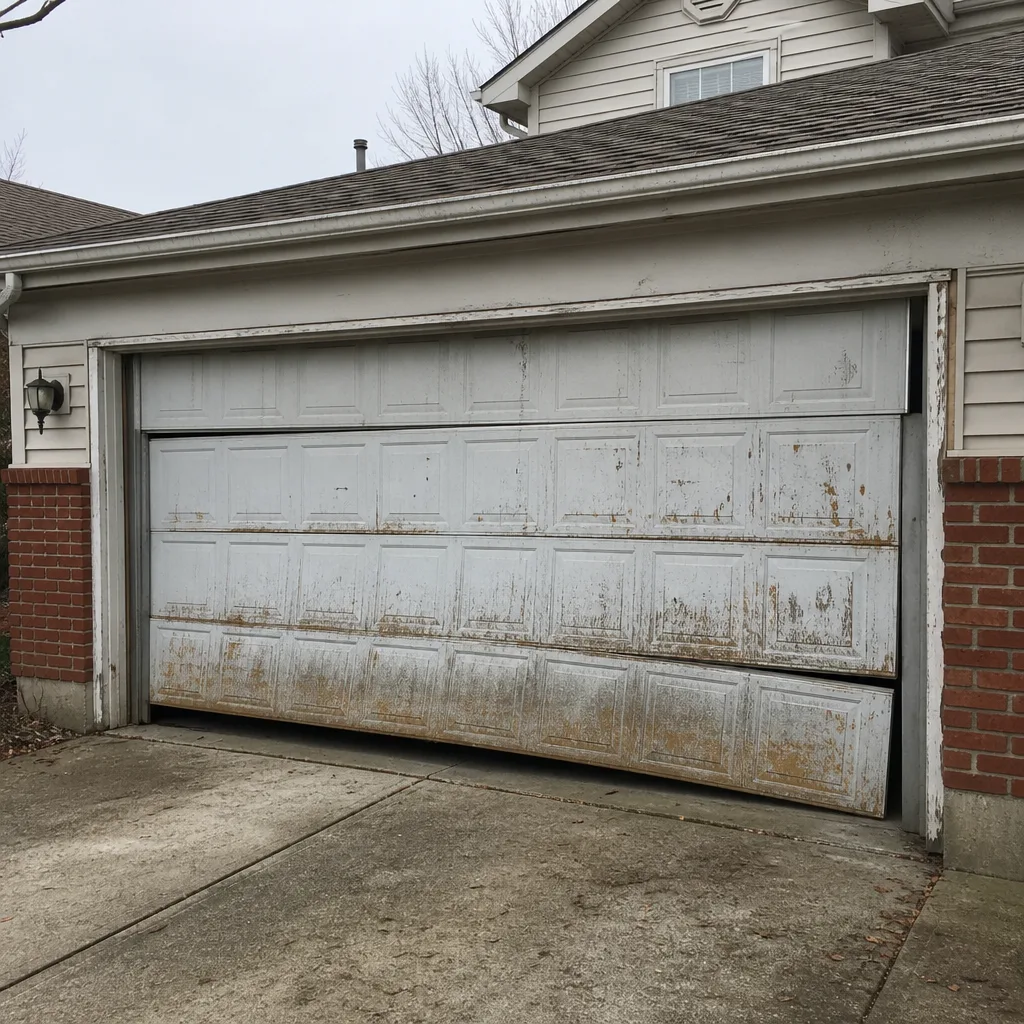 Before
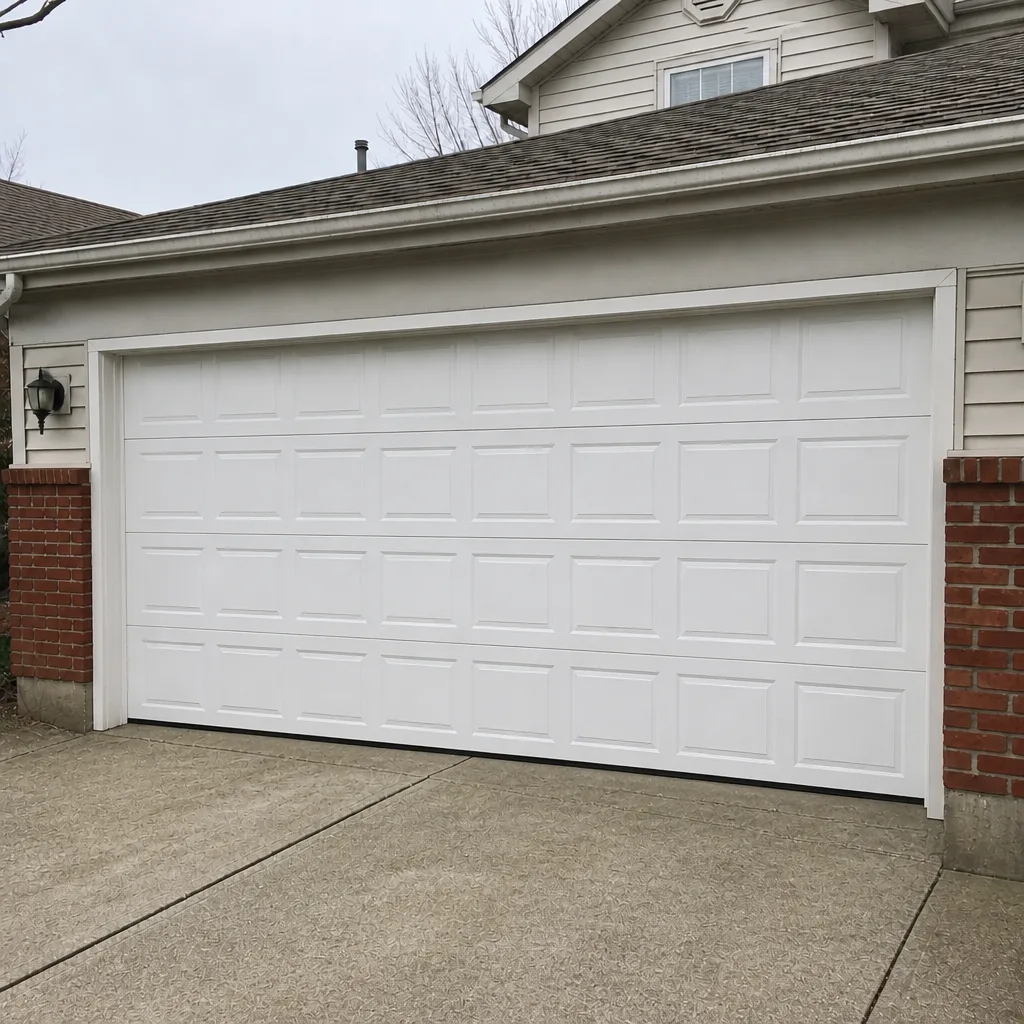 After
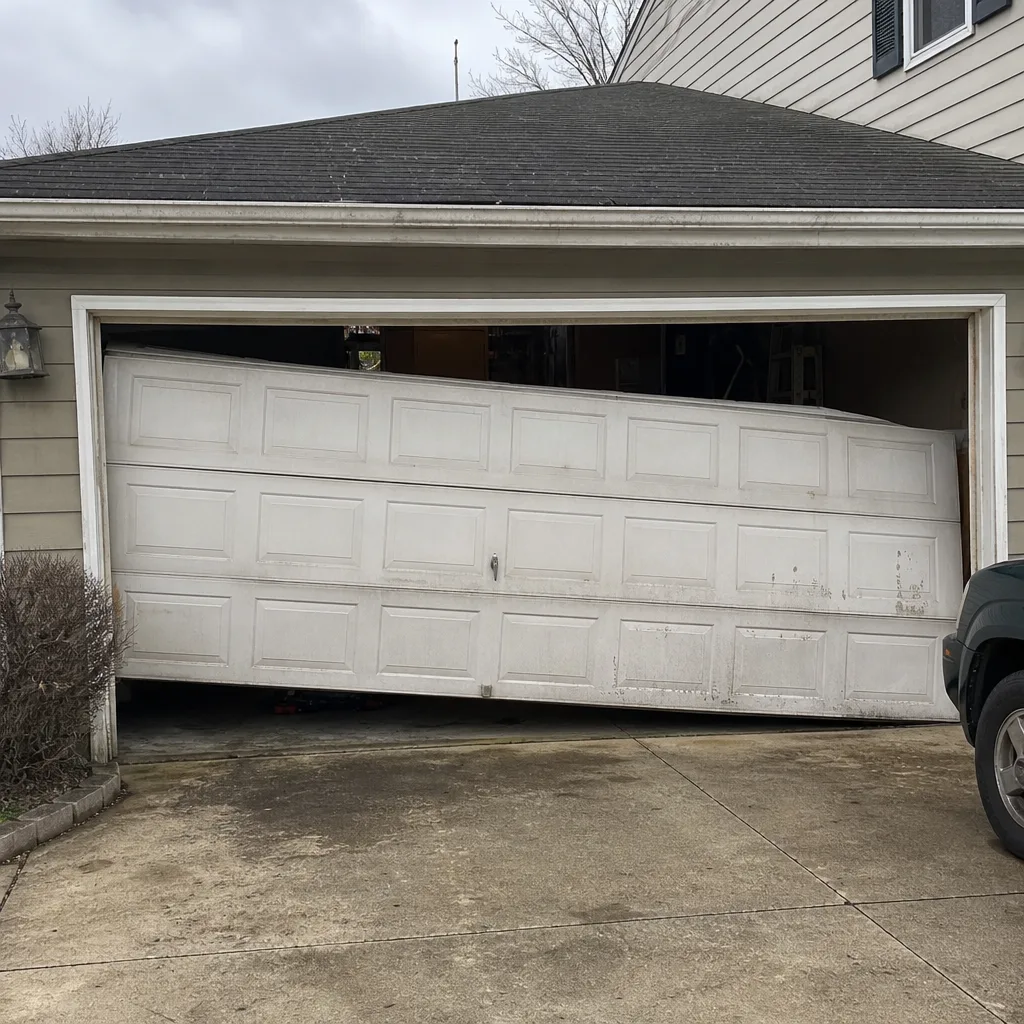 Before
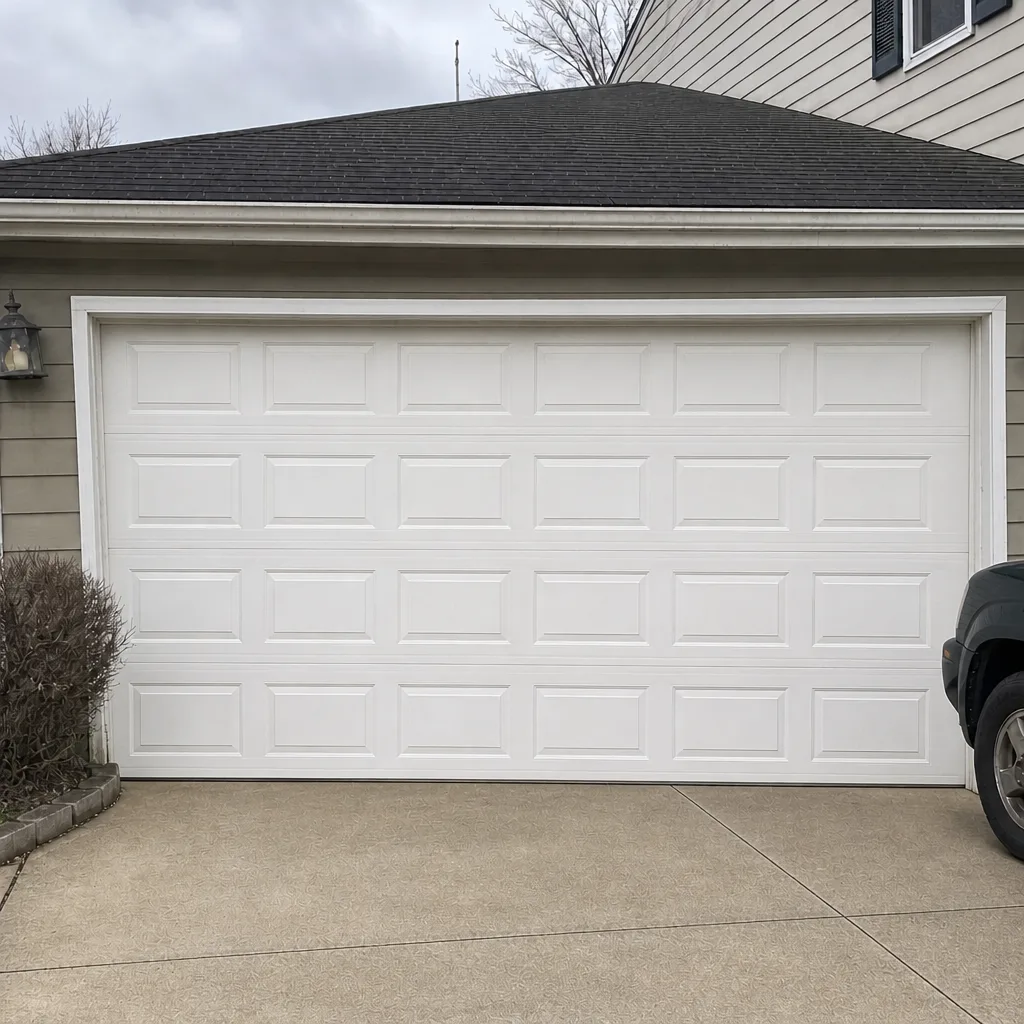 After
Common Mistakes to Avoid
- Buying a door before checking HOA guidelines. In Fishers subdivisions like Saxony and Thorpe Creek, the door you love might not be allowed. Check first, then shop.
- Skipping insulation to save a little up front. An uninsulated steel door is the most common reason a newer Fishers home needs a full replacement while the rest of the house is fine.
- Mismatching opener and door. Heavy doors need motors rated for the load, and a mismatched pair wears both out quickly.
- Choosing material based on looks alone. A wood door looks lovely on a showroom photo and demands more refinishing in Indiana’s humidity than most homeowners expect.
- Ignoring the finish during salt season. Washing the door off a couple of times during the winter is the single best thing you can do for a steel door’s lifespan on a Hamilton County road-adjacent driveway.
- Assuming brand doesn’t matter. Openers and doors are made differently across Clopay, Amarr, Wayne Dalton, LiftMaster, Chamberlain, Genie, and Craftsman, and the right replacement part is specific to the brand and model.
- Doing spring work as a DIY job. Torsion springs carry serious stored energy and can cause severe injury. Let a trained technician handle them.
When to Call a Professional
Some garage door issues are safe to investigate yourself: a remote that’s stopped working, a door that’s stuck in the open position, a panel that looks dented. Others aren’t. Anything involving torsion springs, cables, or the weight-bearing parts of the door needs a trained technician. Spring replacement in particular is dangerous and not a job for a homeowner with a ladder. Electrical wiring at the opener, opener motor replacement, and any repair that requires modifying the track should be handled by a professional as well.
We also recommend a call when the door’s behavior has changed without an obvious cause: it’s running slower, it’s noisy on a specific side, or the opener’s response feels delayed. Those are usually signs of a problem that’s easy to fix early and expensive to fix late. Hillcrest Garage Door Service offers free estimates in Fishers. Call (866) 810-7496. We answer 24/7. Fast dispatch from 7am to 7pm, Sunday through Friday.
Frequently Asked Questions
A new insulated steel door in Fishers typically runs about $1,200 to $2,500 installed for a standard single-car door, and closer to $2,000 to $3,500 for a two-car door, with the exact price set by the written estimate. Custom sizes, composite doors, and doors with windows land higher. Call (866) 810-7496 for an exact quote. Estimates are free.
No. Most Fishers HOAs require architectural approval before installation, and a door installed without it can be forced to come back down. The approval process is usually straightforward if you submit the door specs and a color sample. Check with your subdivision’s architectural review committee before placing an order.
A broken torsion spring is the most common repair we see in Fishers, and it’s usually a result of the temperature swings between winter and summer. Springs lose tension gradually and then fail suddenly. A single spring replacement typically runs $180 to $340, and a matched pair is about twice that since both springs are almost always replaced together. Call (866) 810-7496 for exact pricing on your door.
Once a year is a good baseline. Have a technician check the springs, cables, rollers, track alignment, and opener force reverse, and lubricate the moving parts. If your door has any age on it or you’ve noticed it running noisier, twice a year is a reasonable interval. Regular service catches small problems before they turn into full replacements.
Yes, in a few specific ways. South-facing garages get the longest sun exposure, so the finish and insulation degrade faster. A UV-resistant finish and a door with solid insulation matter more here than on an east- or west-facing garage. If your current door is fading or cracking on the south-facing side, that’s usually the reason.
Permit requirements vary by scope and by what else is changing on the home. A like-for-like replacement sometimes doesn’t require one; changes to the opening, the framing, or the electrical hookup for a new opener usually do. Always confirm with the Fishers building department before any work begins.
The Bottom Line
A garage door in Fishers is a 15- to 25-year decision if you choose well and a 5- to 8-year decision if you don’t. The three choices that carry the most weight are the material (insulated steel is the sweet spot for this climate), the insulation (under-spec it and the whole system suffers), and the opener (match it to the door’s weight and the brand already in the garage). Layered on top of that: check HOA guidelines before you shop, keep in mind your garage’s orientation, and treat salt-season cleanup as part of routine maintenance. Every other decision gets easier once those three are locked in. When it’s time to talk through your own door, call (866) 810-7496. We answer 24/7. Fast dispatch from 7am to 7pm, Sunday through Friday.
Written by the team at Hillcrest Garage Door Service.