
Last updated November 15, 2026
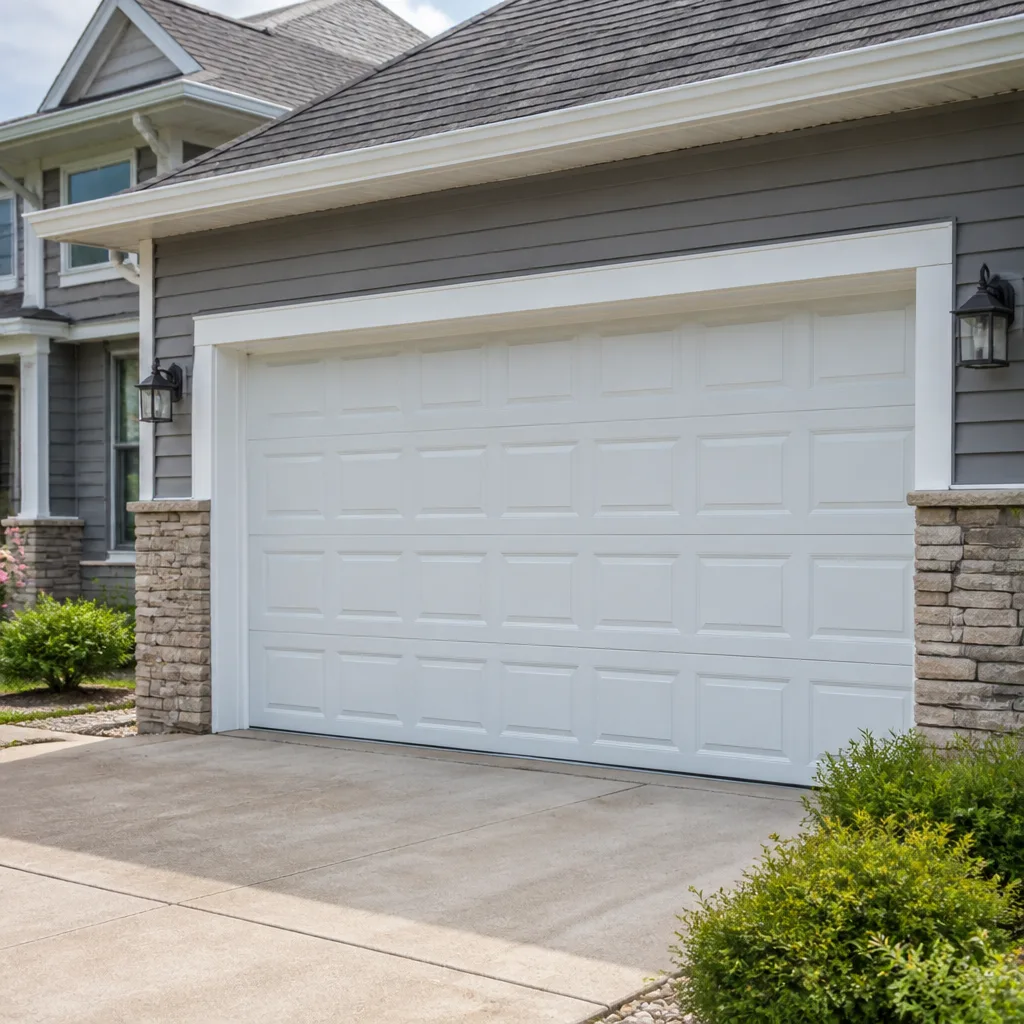 Raised-panel steel
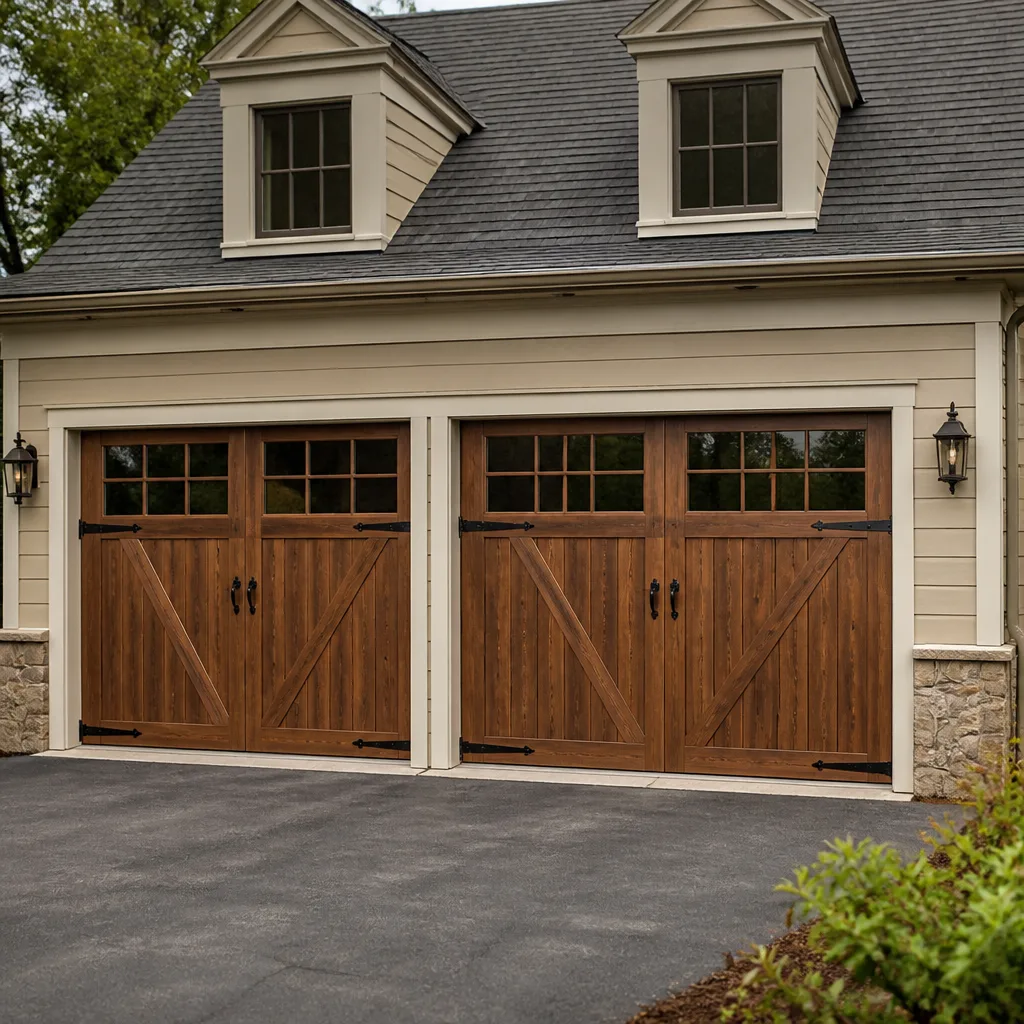 Carriage house
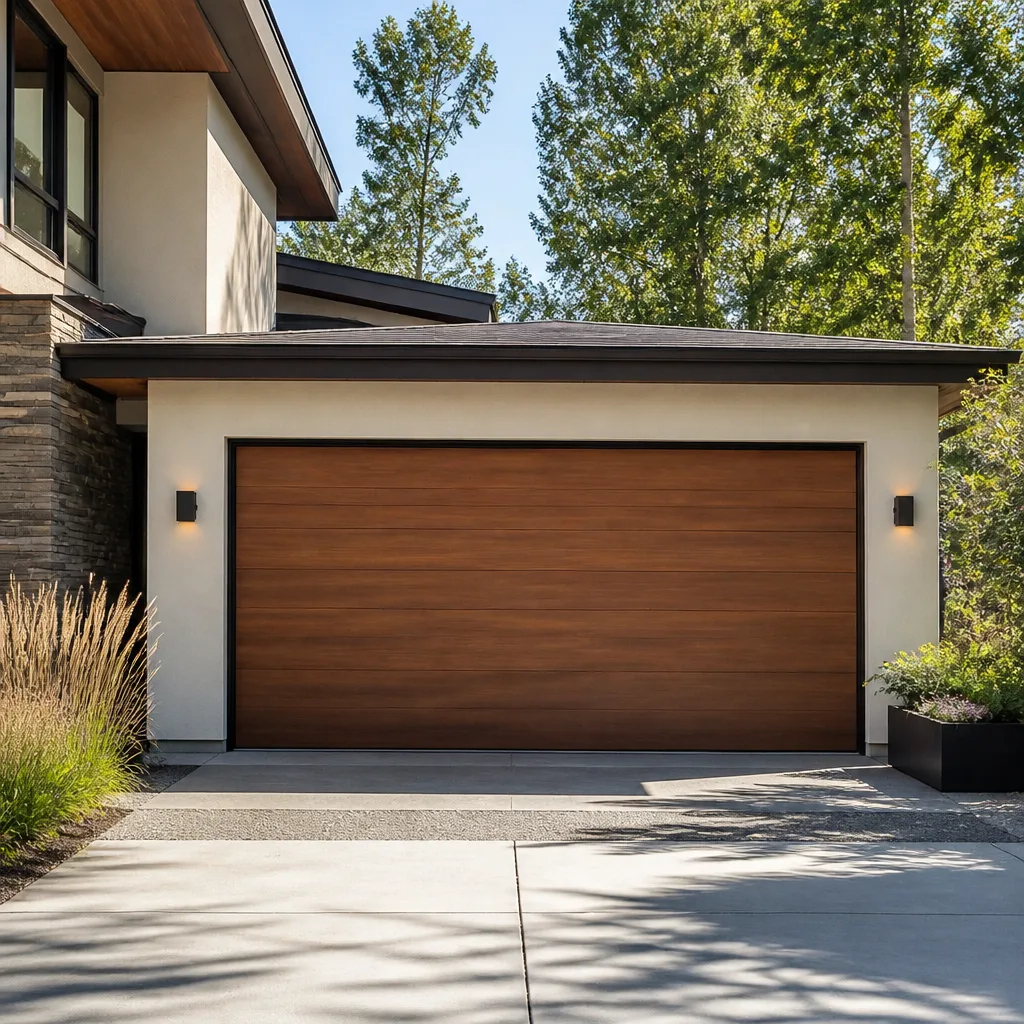 Modern flush
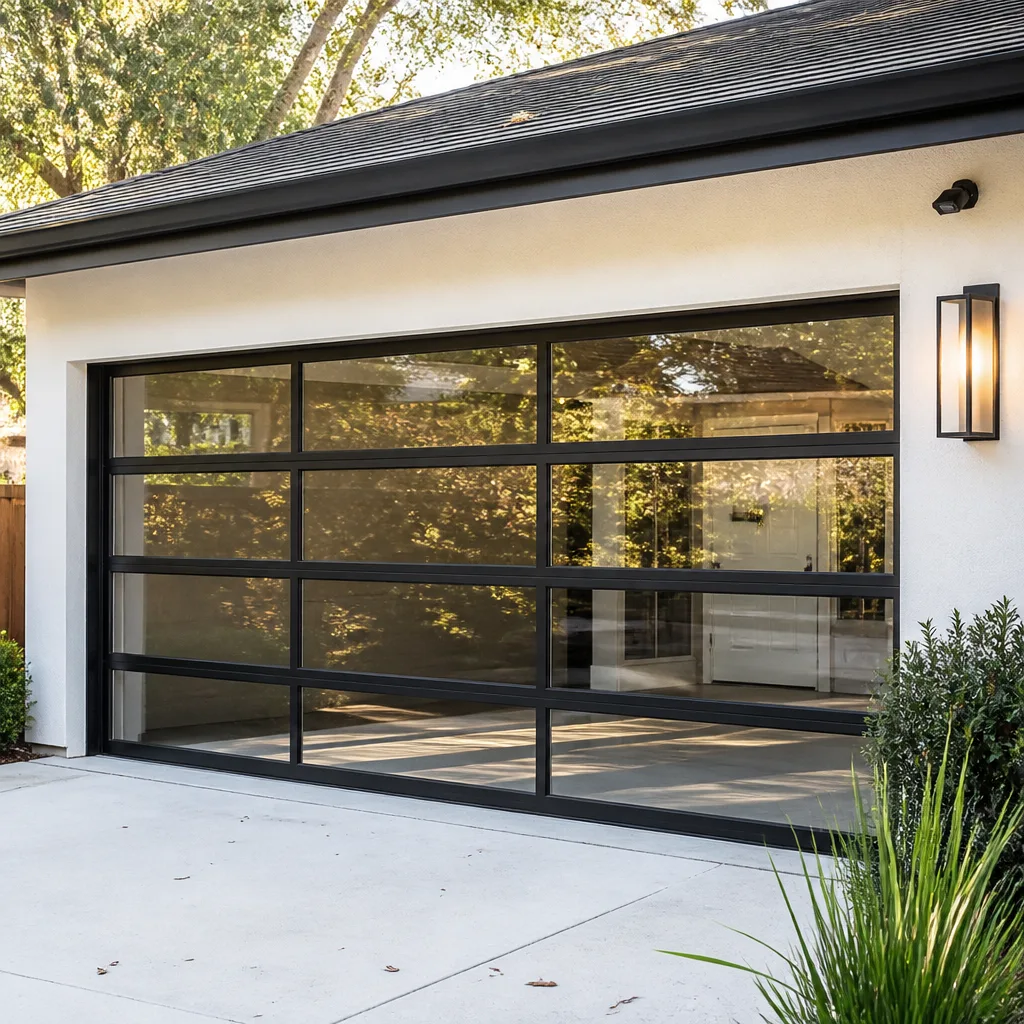 Full-view glass
 LiftMaster openers
 Chamberlain openers
Full 25-point door and opener safety check with every visit - springs, cables, rollers, tracks, and your LiftMaster or Chamberlain opener included
You get a price before we start. It does not change when the pro arrives.
Get your free estimateGarage Door Repair Troubleshooting in Fishers: Common Problems and How to Fix Them
Most garage door advice treats every problem as a single mystery – the door stopped, so something broke. In our experience, that framing is what turns a straightforward repair into a bigger bill, because the door that “just stopped working” is almost always one of five distinct mechanical systems that failed, and the symptoms overlap enough to fool you. A stiff door that won’t lift looks like a dead opener. A misaligned track mimics a broken spring. Guess wrong and you’re adjusting parts that were never the problem. This guide gives Fishers homeowners a category-first diagnostic framework: figure out which system failed, then decide whether it’s a job for a Saturday afternoon or a call to a specialist.
Quick Answer
Garage door problems in Fishers almost always trace back to one of five systems: springs, cables, rollers and tracks, the opener, or the safety sensors. The fastest way to narrow it down is the manual release test – pull the red cord, then lift the door by hand. If it’s heavy or won’t stay up, you have a mechanical problem (springs or cables) that no amount of opener troubleshooting will fix. If it lifts smoothly by hand but the motor won’t run it, the fault is electrical – opener, sensors, or controls. Springs and cables are hands-off work with real injury risk; sensor alignment, lubrication, and limit switch adjustments are safe for most homeowners.
Styles & brands we work with
- Raised-panel steel
- Carriage house
- Modern flush
- Full-view glass
- LiftMaster openers
- Chamberlain openers
Table of Contents
- The Five-System Framework: Isolate Before You Fix
- The Manual Release Test: Your Single Best Diagnostic Tool
- Why Fishers Freeze-Thaw Cycles Break Doors That Were Fine Last Fall
- Springs and Cables: What You Can Check and What You Must Never Touch
- Openers and Sensors: Diagnosing LiftMaster, Chamberlain, and Genie Systems
- Homeowner-Safe Fixes vs. Hands-Off Work
- What You Just Diagnosed: The Decision Tree
- What Garage Door Repair Costs in Fishers
The Five-System Framework: Isolate Before You Fix
Every residential garage door runs on the same set of interacting systems. Before you touch anything, ask which one is actually failing. Here’s how each one presents when it goes bad.
- Springs (torsion or extension): The door is dead heavy, won’t stay up when you lift it by hand, or you heard a loud bang from the garage. On a torsion setup, look at the spring above the door – a visible gap in the coil means it broke.
- Cables: The door lifts crooked, hangs at an angle, or a cable is visibly loose or off its drum. Cables work with springs as the counterweight system, and they fail under load.
- Rollers and tracks: The door binds, scrapes, or jumps in the track. The door may run fine for a few feet and then catch. Bent tracks and worn nylon rollers are the usual culprits.
- The opener: You hear the motor run but the door doesn’t move, or nothing happens at all. The drive mechanism is a separate discipline from the door itself.
- Safety sensors: The door goes down a foot and reverses, or won’t close at all with the wall button held. Almost always the photo-eye pair at the bottom of the tracks.
Naming the system first saves real money. A homeowner who assumes “the opener is broken” when the spring snapped may buy a new motor for a door that was never going to open with any motor attached. And a door that binds on a bent track will chew up a new opener if the track isn’t corrected first. In our experience, half of “opener failures” in Fishers turn out to be door-side problems the opener was never equipped to overcome. Before doing anything else, isolate which of these five is failing.
The Manual Release Test: Your Single Best Diagnostic Tool
If you only do one thing before you call anyone, do this. The manual release cord – the red handle hanging from the opener trolley – disconnects the door from the motor and tells you which half of the system is failing. It’s the most diagnostic 30 seconds in garage door troubleshooting.
Stand clear of the door’s path and pull the release cord toward the door (never toward the opener). Then lift the door by hand to about waist height and let go.
- Door lifts easily and stays up: The door and springs are healthy. Your problem is electrical – opener, sensors, or controls. Skip ahead to the opener section.
- Door is very heavy and slams down when you let go: Your springs are broken or badly weakened. The opener was masking this until the door finally stopped. Stop here – this is spring work and not a homeowner job.
- Door lifts but feels gritty, binds, or won’t stay up: Rollers, tracks, or cables are involved. Inspect before running the opener again.
- Door lifts smoothly but the opener still won’t run it when reconnected: You’ve confirmed a motor or control issue.
Reconnect the door by pulling the release cord back until the trolley clicks into the carriage. If the door won’t close by hand because the spring is broken, don’t force it – call a specialist. If your diagnosis lands on the motor side, our garage door opener repair team handles LiftMaster, Chamberlain, Genie, and Craftsman systems with the same depth as the doors themselves.
Why Fishers Freeze-Thaw Cycles Break Doors That Were Fine Last Fall
Indiana’s freeze-thaw swings put specific stress on a garage door, and Fishers homes see it every winter. The garage is typically the least insulated, least climate-controlled space in the house, so the door and its hardware take the full temperature swing while the rest of the house stays steady. Here’s what that does.
Track misalignment. The steel tracks expand and contract with the temperature, and the anchor points can shift slightly as the ground heaves and settles. A track that was dead straight in October may be out of alignment by February. The symptoms look electrical – the door reverses partway, or the opener strains and shuts off – but the door is physically binding.
Grease hardening. Cold turns the grease on the rollers, hinges, and springs stiff. A door that rolled smoothly at 60 degrees feels sluggish at 20. The opener has to work harder, and on an aging motor that extra resistance can trip its force limit and make it reverse. Homeowners often read this as a failing opener when the actual fix is cleaning and re-lubricating with a cold-rated grease.
Spring fatigue. Metal is stressed by repeated cycling across a wide temperature range. Springs are rated for a number of cycles, not years, and the constant expansion and contraction speeds up wear. A spring near end-of-life tends to fail on a cold morning when the door first runs.
Sensor fog and ice. The photo-eye lenses can fog over or collect ice, and the door refuses to close. A quick wipe often solves it. If the problem returns even on clear days, the sensors are misaligned or failing and need attention.
If your door acts up every November and settles down in April, that pattern points squarely at thermal issues. Getting the tracks and hardware checked before the first hard freeze helps Fishers homeowners avoid a winter breakdown – but it isn’t a guarantee the door won’t fail, just a sensible preventive step.
Springs and Cables: What You Can Check and What You Must Never Touch
Springs and cables are the counterweight system. Together they hold the full weight of a door that runs 150 to 400 pounds, and they’re under enormous tension even when the door is closed and at rest. This is where the line between a safe look and a dangerous repair sits, and it’s worth understanding plainly.
What you can safely do:
- Look at the torsion spring above the door and check for a visible gap in the coils – that’s a break, confirmed.
- Check extension springs (the ones that run along the horizontal tracks on some doors) for a visible gap or stretch.
- Look at the cables – if one is loose, off the drum, or clearly frayed, that’s a real problem.
- Run the manual release test. That heavy-door symptom is diagnostic.
What you must not touch:
- Adjust, tighten, or loosen spring tension.
- Wind or unwind a torsion spring.
- Reattach a cable to its drum or adjust cable tension.
- Attempt to “help” a door with a broken spring back into the tracks.
Torsion springs carry enough stored force to cause serious injury if they slip or release suddenly under a homeowner’s hand, and the proper tools (winding bars) are not a casual purchase. This is not a scare tactic – it’s why every garage door specialist treats spring work as a technician-only job. If you’ve confirmed a broken spring or a cable off its drum, stop and call a specialist. This is the job where DIY tends to end in an emergency room visit. Cables, too, fail and snap suddenly under tension.
If you’ve reached this section you likely have a spring or cable issue. Our garage door repair team can inspect, confirm the failure, and quote the fix – a spring estimate is free, and the price is agreed before any work starts.
Openers and Sensors: Diagnosing LiftMaster, Chamberlain, and Genie Systems
If the manual release test proved your door and springs are healthy, the fault is in the drive mechanism. The three most common opener symptoms in Fishers are the door reversing before it closes, the motor running without moving the door, and the opener dead or unresponsive.
Door reverses before closing. Nine times in ten this is the safety sensors – the photo-eye pair at the bottom of the tracks. Look at each sensor’s indicator light; if it’s blinking or off, the sensors are misaligned, dirty, or the beam is blocked. A broom handle, a stored bike tire, or a bag of dog food in the beam will do it. Wipe both lenses, confirm the sensor brackets haven’t been bumped, and check that both lights are steady. On LiftMaster and Chamberlain systems, look for the colored LED to confirm status. If a light stays off, the wiring or the sensor itself may be failing.
Motor runs but the door doesn’t move. The opener’s carriage may have disengaged from the trolley, or the chain or belt is broken or slack. Openers also use a limit switch to know where to stop; if the limit is out of adjustment, the door stops short or runs past. Craftsman and Genie models often have this exposed where it’s adjustable.
Opener dead or straining. On a LiftMaster or Chamberlain with a battery backup, a dead opener may actually be a dead battery circuit. On any model, check the wall switch, the remote battery, and whether the motor is straining against a force limit – which brings us back to the door. A stiff, cold door trips the force limit and makes the opener look broken when it isn’t.
Nothing responds at all. Is the opener plugged in? Is the circuit breaker tripped? Is the lock-out engaged? Check the obvious first, then test the wall switch separately from the remote. If the wall switch works and the remote doesn’t, the problem is in the remote, not the motor.
If you’ve checked sensors, battery, and power and the opener still misbehaves, the diagnosis gets model-specific. Our technicians work on the actual system in your garage, whether it’s a Genie, a LiftMaster, or a Chamberlain, and can advise whether repair or replacement makes more sense. See garage door opener repair for the full scope.
Homeowner-Safe Fixes vs. Hands-Off Work
Here’s the honest line. Some fixes are within reach for a careful homeowner. Others are not, and touching them makes the repair more expensive and the garage more dangerous.
Safe to attempt:
- Sensor alignment and cleanup. Wipe the photo-eye lenses, confirm the brackets are square, and make sure nothing is blocking the beam.
- Lubrication. Grease the rollers, hinges, and springs with a cold-rated garage door lubricant. Avoid WD-40 as a long-term fix; it’s not the right product for the metal. Do this before winter in Fishers.
- Limit switch adjustment. If the door stops short or runs too far and the manual is clear, the limit switch is a homeowner-fixable adjustment. Follow the manufacturer’s instructions.
- Remote and wall switch troubleshooting. Fresh batteries, reprogram the remote per the manual, check power.
- Track inspection. Look for visible bends or debris, but don’t try to bend a heavy steel track back into place by hand – that often makes it worse.
Hands-off:
- Spring adjustment or replacement, torsion or extension.
- Cable reattachment, tensioning, or replacement.
- Roller and hinge replacement if the door needs to come off its tracks.
- Any repair that requires putting your hands near a tensioned spring or drum.
Keep in mind a general rule: if you’re not sure, it’s a hands-off job. The cost of a specialist to confirm a safe repair is trivial compared to the cost of an injury or a damaged door and opener. And a few minutes of sensible prevention – lubrication before the cold, checking sensors after a storm – heads off a lot of the breakdowns we see.
What You Just Diagnosed: The Decision Tree
By now you’ve tested the manual release, checked which of the five systems is failing, and separated safe fixes from dangerous ones. Here’s the quick decision tree. Read the symptom, follow the branch, and you’ll end this guide knowing exactly what to tell a technician.
- Door is heavy by hand, won’t stay up, or you heard a bang: Spring failure. Call a specialist. Don’t run the opener. Say: “The door is heavy with the release pulled and I think the spring is broken.”
- Door lifts crooked or a cable is loose or off the drum: Cable or track issue. Call a specialist. Say: “The door is crooked and I can see a cable is off or slack.”
- Door binds or scrapes but is light by hand: Track or roller issue. Safe to inspect and lubricate; if it persists, call. Say: “The door binds in the track around the middle.”
- Door lifts smoothly by hand but the opener won’t move it: Opener. Check power, sensors, and battery first, then call. Say: “The door is fine by hand but the motor won’t run it.”
- Door reverses before closing, sensors blinking or off: Sensor issue. Wipe and align. If that fails, call. Say: “The door reverses and the sensor lights are blinking.”
- Door is fine in warm weather and fails in cold: Climate stress. Lubricate, then get a full inspection before winter. Say: “The door acts up when the temperature drops in Fishers.”
That’s the whole point of a category-first approach. A technician who hears “the door is heavy with the release pulled, and I think the spring is broken” skips half the diagnostic steps a vague “it’s broken” call requires. When you call, describe the symptom, the system, and what you already tested. It saves time and often saves money on the job.
What Garage Door Repair Costs in Fishers
Costs vary by the system and the part, so treat any figure you hear as typical, not exact. In the Fishers market, repair work generally falls into a few bands. A door that needs a new spring is a different job than an opener that needs a sensor or a limit adjusted. Here’s the honest shape of it. All prices are estimates and the written quote you receive is the final price.
- Opener repair (sensor, limit switch, remote, wiring): the lower-cost band, typical of straightforward control-side fixes.
- Roller, hinge, or track work: a mid-range repair that varies with how many parts are involved.
- Spring replacement: priced per spring, and because torsion doors use a matched pair that’s usually replaced together, a pair costs about twice a single spring. Never assume a single-spring quote covers the pair.
- Cable replacement and drum work: priced by the job, often alongside a spring repair since both are part of the counterweight system.
What we won’t do is quote a number on a phone call for a job we haven’t seen. The price is set in writing before any work starts, so there are no surprises when the invoice arrives. If someone tells you a one-price-fits-all figure over the phone, ask for that in writing. For a fair, specific estimate on your door, garage door repair is where to start, and estimates are free.
Common Mistakes to Avoid
- Replacing the opener when the door is the problem. If the manual release test shows a heavy door, a new motor won’t fix it and will fail the same way. Confirm the door is light by hand before you spend money on a motor.
- Greasing with the wrong product. WD-40 and general-purpose oils attract dirt and don’t hold up in cold weather. Use a garage-door-rated lubricant before the Fishers winter sets in, and a door that ran rough all winter often smooths out after it.
- Trying to straighten a bent track by hand. Heavy-gauge steel tracks won’t bend cleanly by hand, and a distorted track binds worse. Call a specialist.
- Forcing a door with a broken spring. Pushing a door you can see is heavy puts stress on the cables, drums, and opener. The spring is the fix; forcing the door can turn a spring job into a bigger one.
- Ignoring sensor warning lights. A blinking or dark sensor light means the door won’t close reliably. Cleaning and alignment cost nothing; ignoring it leaves the door blocking or misbehaving.
- Adjusting a limit switch without the manual. It’s homeowner-fixable, but only when you follow the manufacturer’s instructions. Get it wrong and the door runs into the header or stops short of the floor.
- Assuming winter problems are the opener’s fault. Cold-hardened grease and contracted tracks mimic an electrical failure. Lubricate and inspect the mechanical side before you call the opener broken.
See the difference
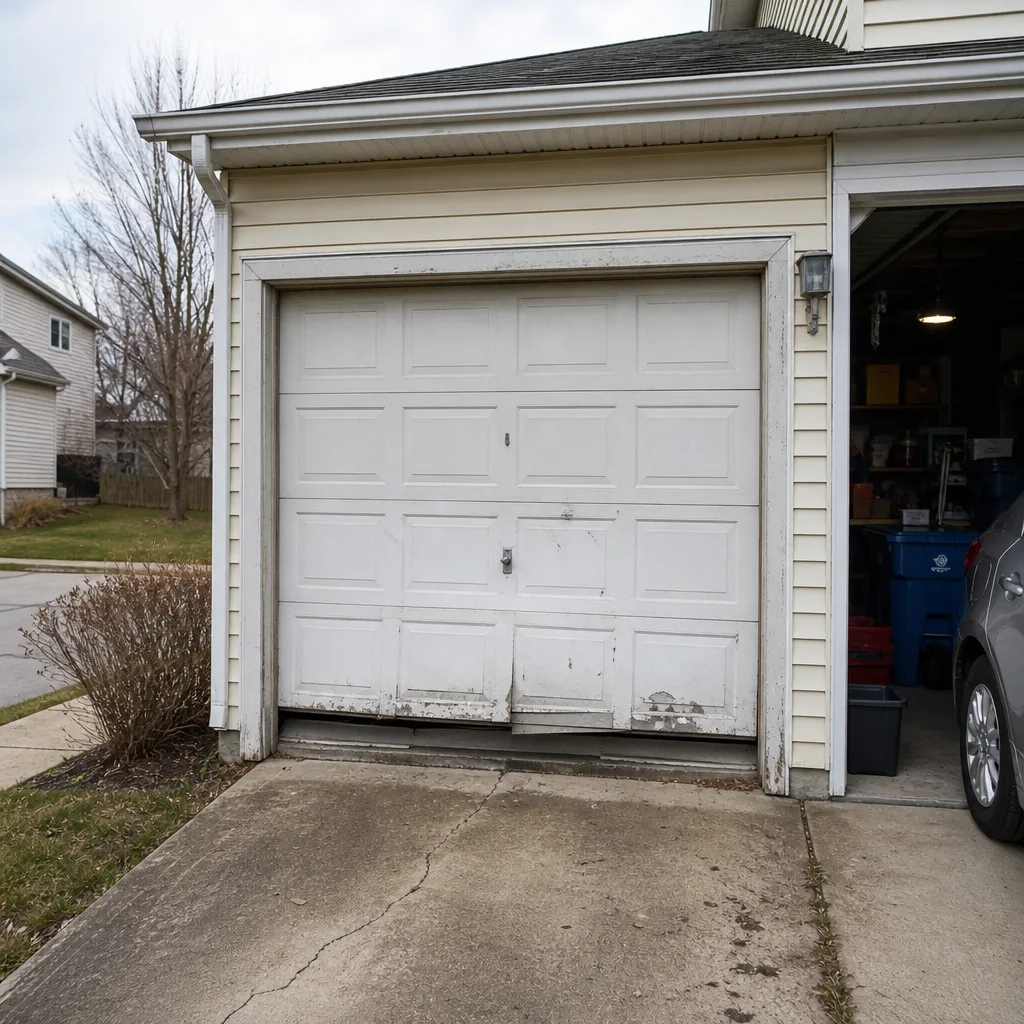 Before
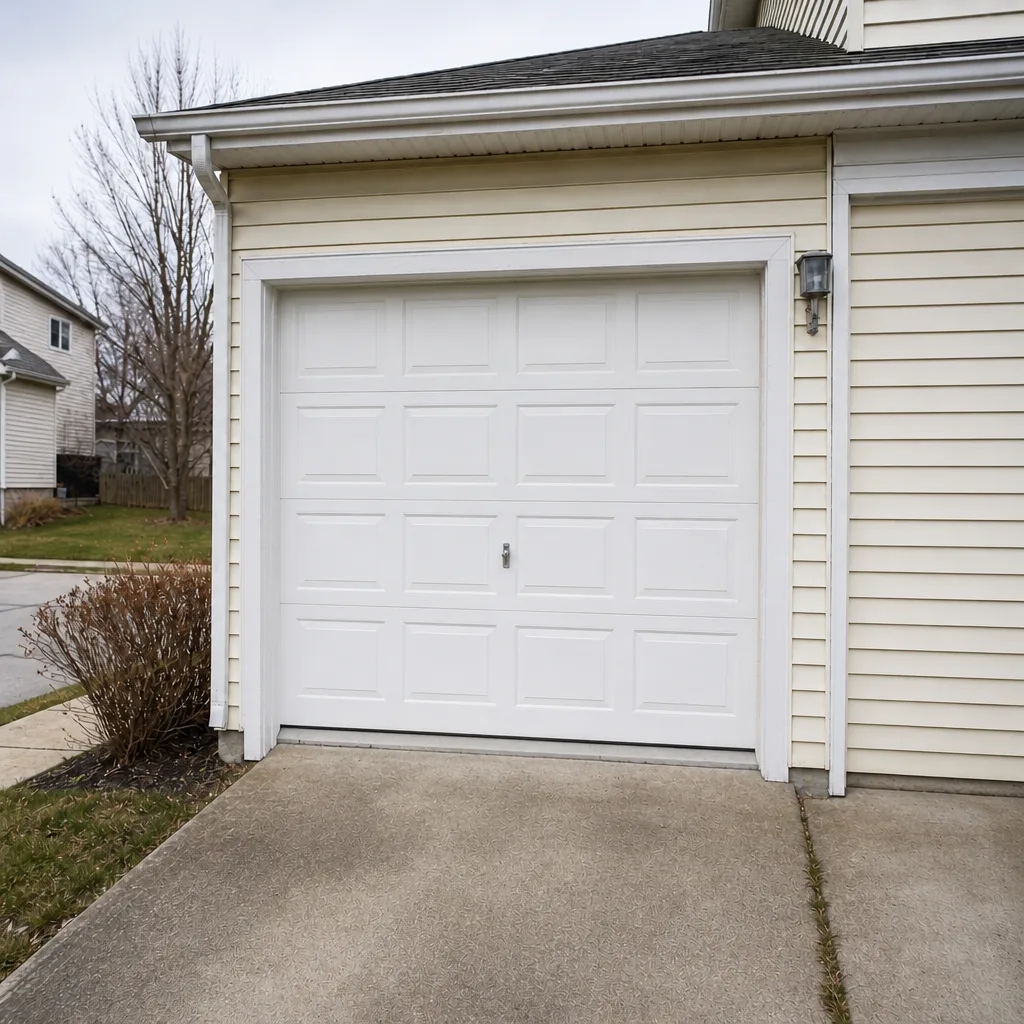 After
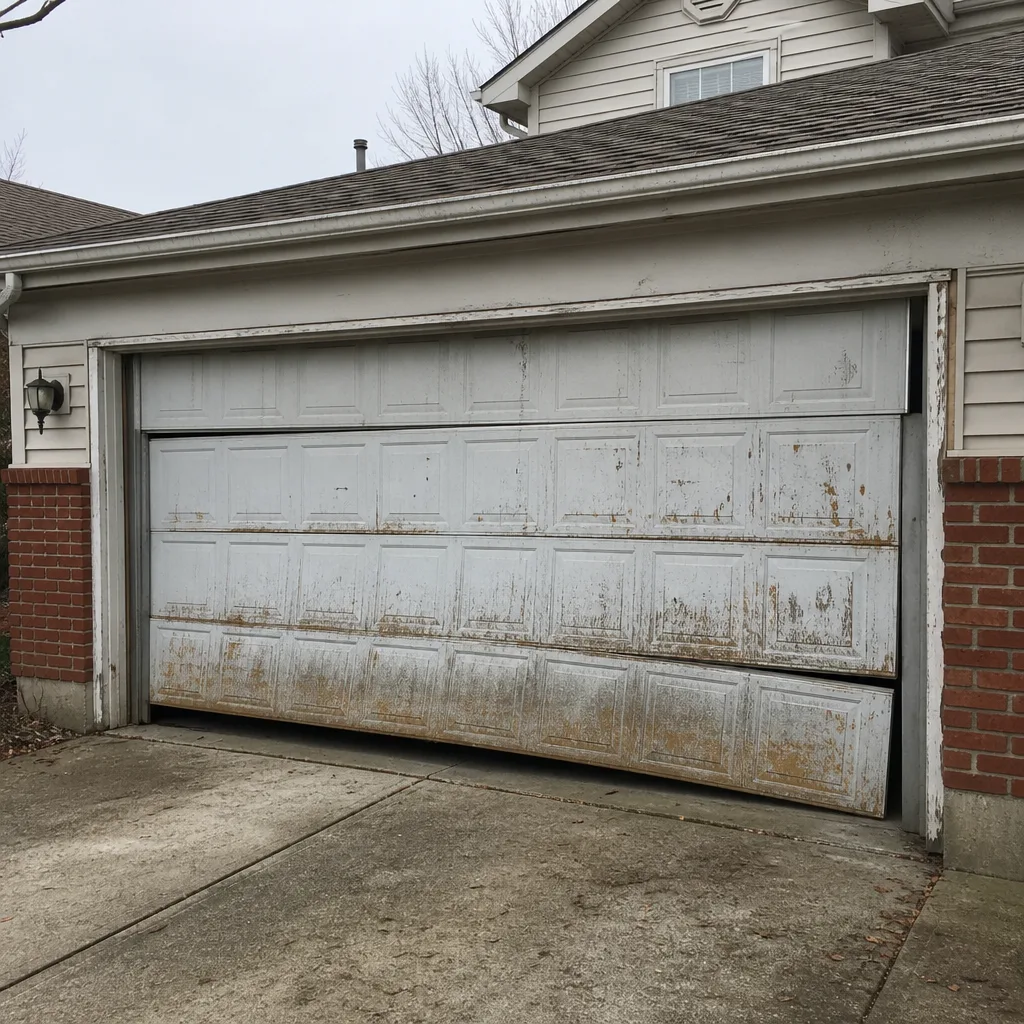 Before
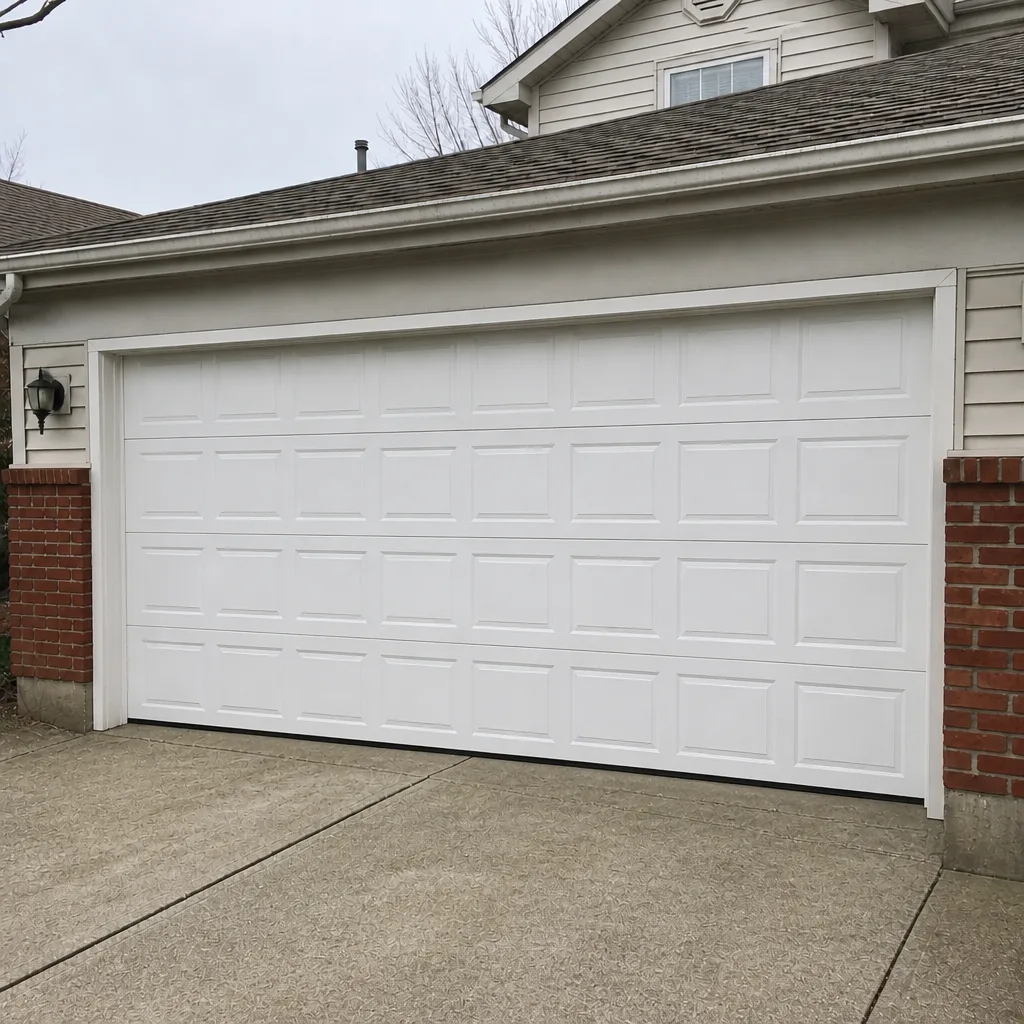 After
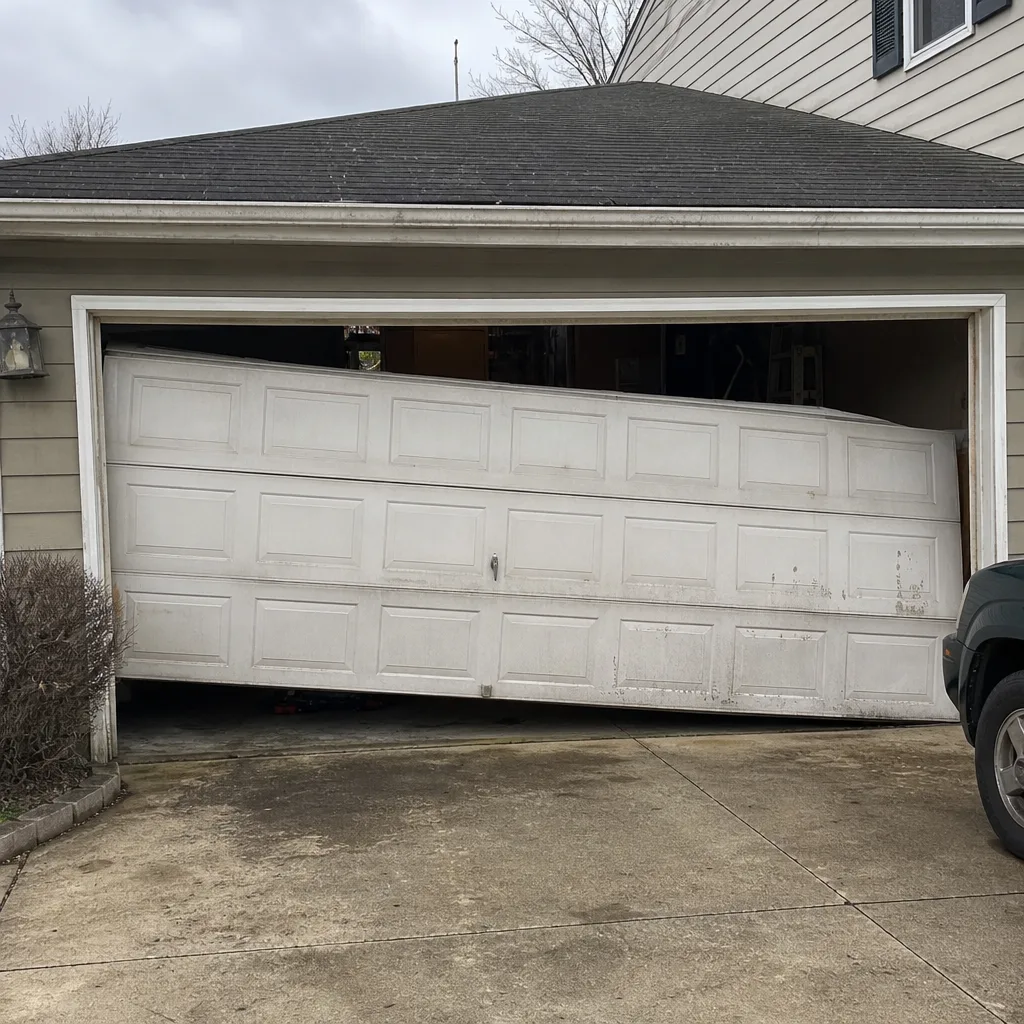 Before
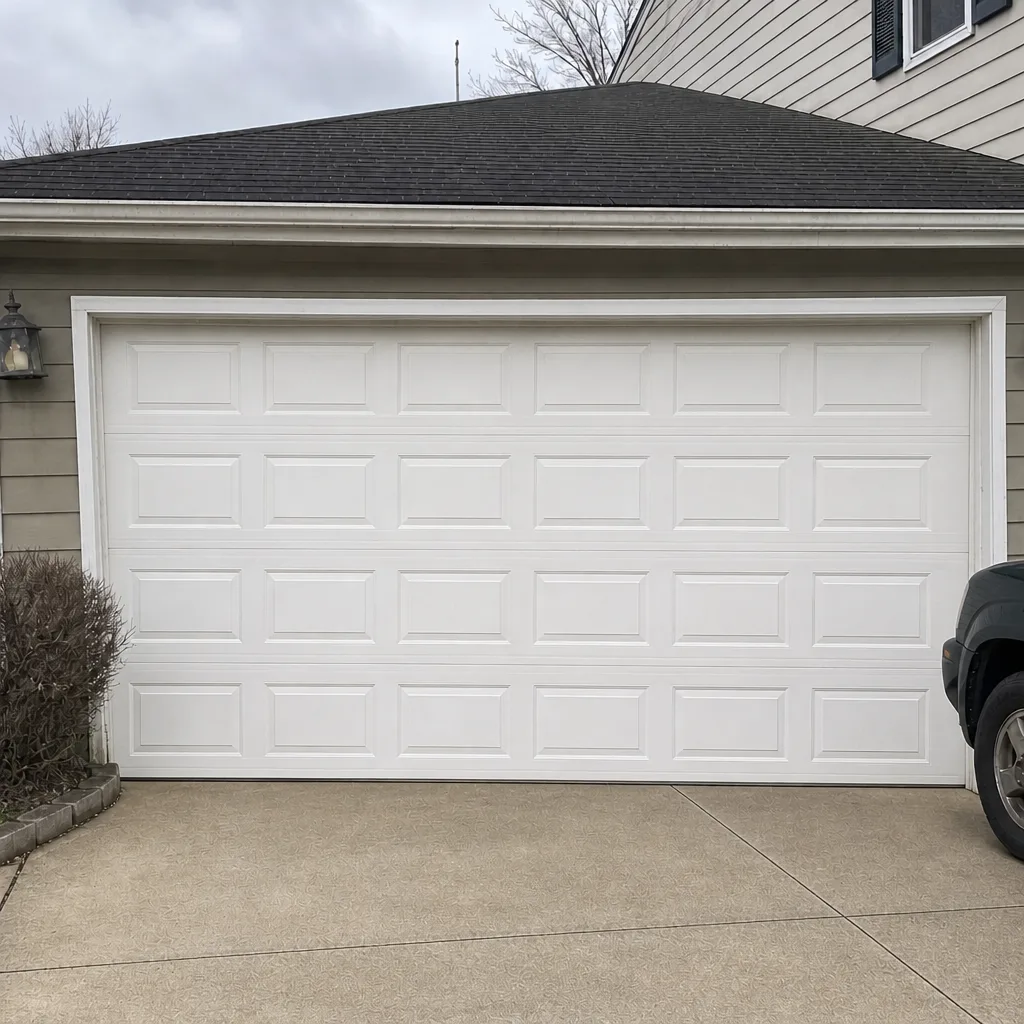 After
When to Call a Professional
Call a specialist the moment you confirm a broken spring, a cable off its drum, a door that hangs crooked, or a track that binds after a lubrication attempt. Those are the jobs where a homeowner repair makes the problem more expensive or exposes you to real injury risk. Also call if your opener won’t respond after you’ve ruled out power, battery, sensors, and limits – diagnosing that takes model-specific knowledge and the right tools. And if your Fishers door misbehaves in cold weather every year, an inspection before winter is worth more than waiting for a failure on the coldest morning. Our technicians have up to 8 years of experience and work on the actual system in your garage, including LiftMaster, Chamberlain, Genie, Craftsman, Clopay, Amarr, Wayne Dalton, and Raynor equipment.
Hillcrest Garage Door Service offers free estimates in Fishers – call (866) 810-7496. We answer 24/7. Fast dispatch from 7am to 7pm, Sunday through Friday.
Frequently Asked Questions
It depends on which of the five systems failed. Opener and sensor fixes sit at the lower end, roller and track work in the middle, and spring or cable replacement costs more, with a matched spring pair typically costing about twice a single spring. The written estimate is the final price and is agreed before work starts. Call (866) 810-7496 for an exact quote – estimates are free.
Yes, same-day repair is often possible for doors that have failed and need urgent attention. Call (866) 810-7496. We answer 24/7. Fast dispatch from 7am to 7pm, Sunday through Friday. A call outside dispatch hours is booked into the next opening.
No. We quote the job in writing after we diagnose it, and that quote is the price you pay. If we find something different on inspection, we tell you before any work begins and you decide. Call (866) 810-7496 for an exact quote – estimates are free.
Yes, our technicians are trained, insured, and work only on garage doors – it’s the single trade we cover. Call (866) 810-7496 to book a visit.
Freeze-thaw cycles expand and contract the tracks and harden the grease on your rollers and hinges. That makes the door bind and heavy, and the opener can trip its force limit and look broken. Lubrication and an inspection before winter usually solve it. Call (866) 810-7496 for a check-up.
No. Torsion springs are under extreme tension and can cause serious injury if they slip during a homeowner repair. A broken spring is a confirmed hands-off job. Call (866) 810-7496 for a safe spring replacement quote.
Not necessarily. Pull the manual release. If the door won’t stay up, the springs or cables are failing and the opener is fine. If the door is light by hand and the motor still won’t move it, the fault is in the opener. Our garage door opener repair team can confirm on site. Call (866) 810-7496.
Yes, we work on LiftMaster, Chamberlain, Genie, Craftsman, Clopay, Amarr, Wayne Dalton, and Raynor systems, matching parts and procedures to your exact brand rather than using generic substitutes. Call (866) 810-7496 to describe what you have.
The Bottom Line
The door that “just stopped working” is one of five systems that failed: springs, cables, rollers and tracks, the opener, or the sensors. Isolate the system with the manual release test, respect the line between safe fixes and spring-and-cable work, and remember that Fishers freeze-thaw cycles cause a lot of failures that look like opener problems. When you call, tell the technician the symptom, the system, and what you already tested – it shortens the diagnostic and often the invoice. Need help now? Hillcrest Garage Door Service is a dedicated garage door specialist in Fishers. Call (866) 810-7496 for a free estimate. We answer 24/7, with fast dispatch from 7am to 7pm, Sunday through Friday. You can also learn more about us.
Written by the team at Hillcrest Garage Door Service.