
Last updated November 15, 2026
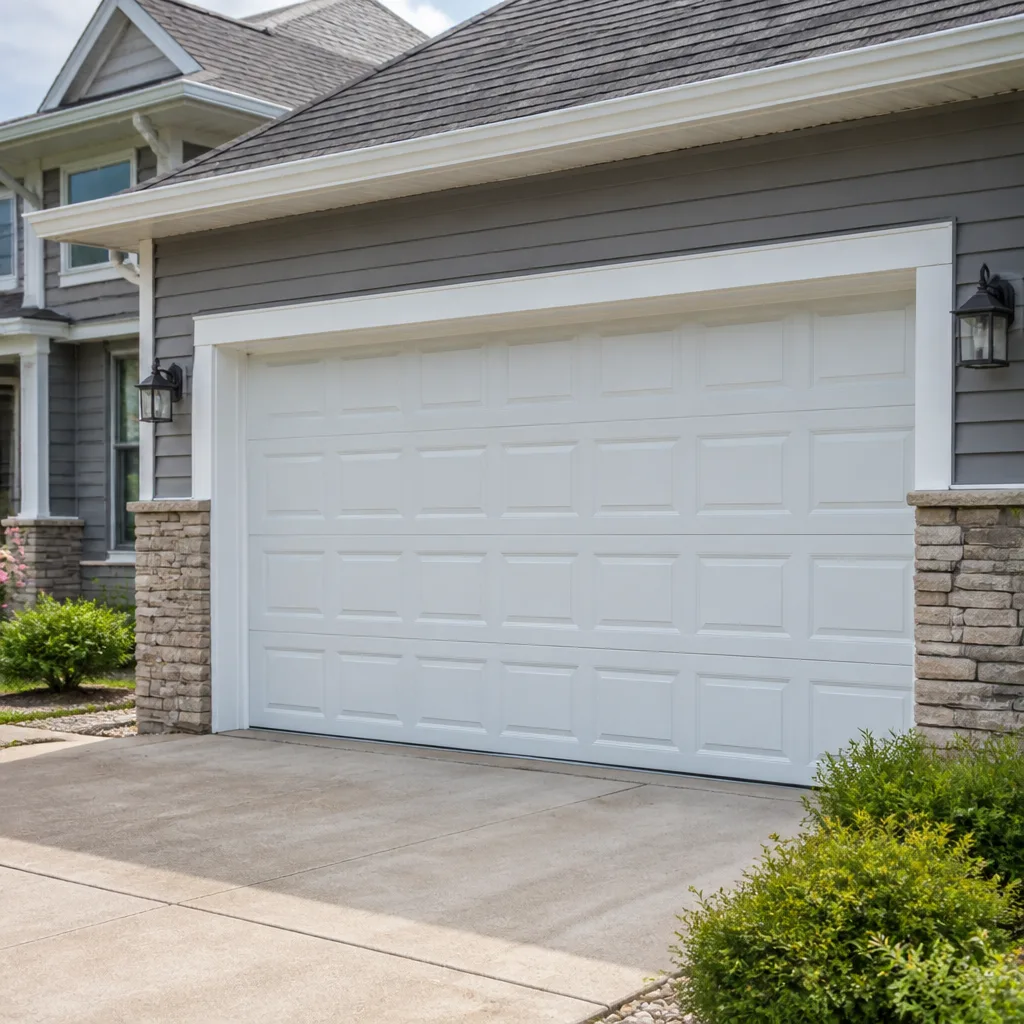 Raised-panel steel
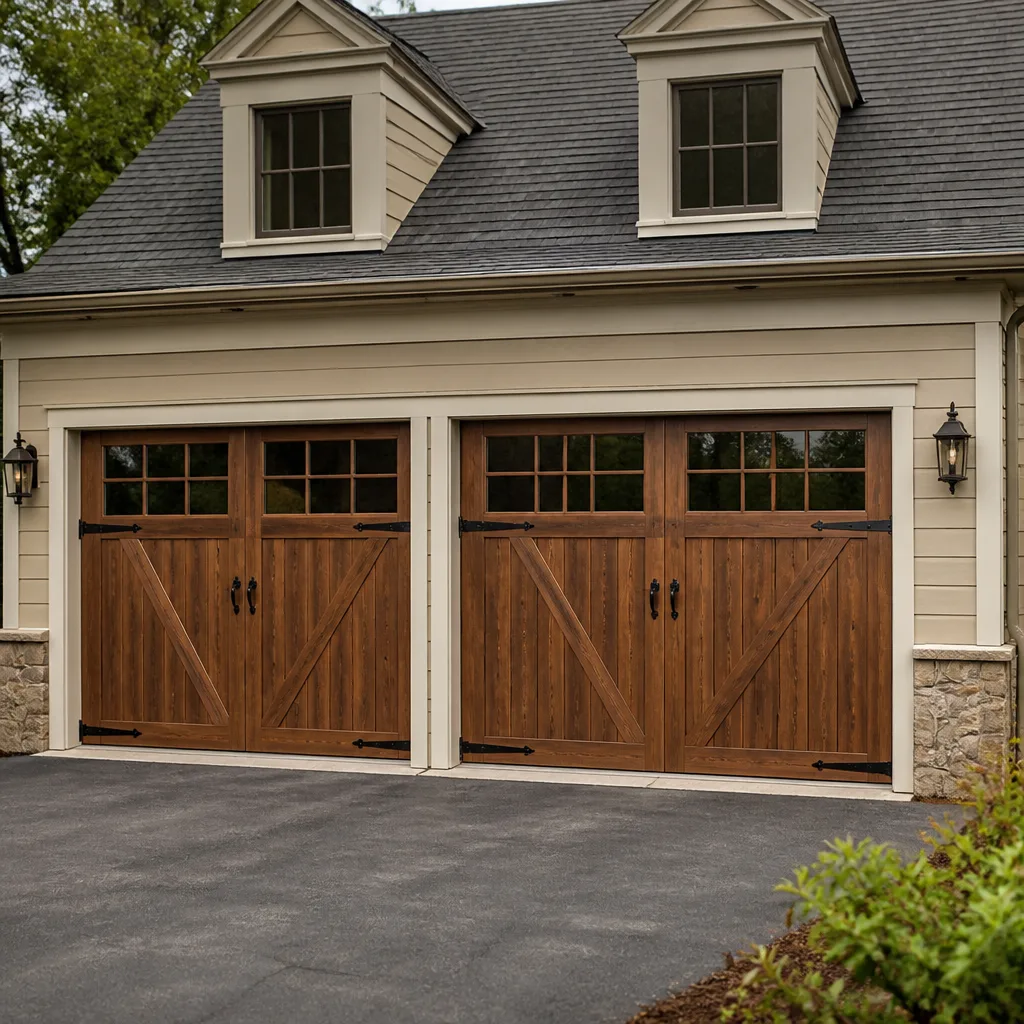 Carriage house
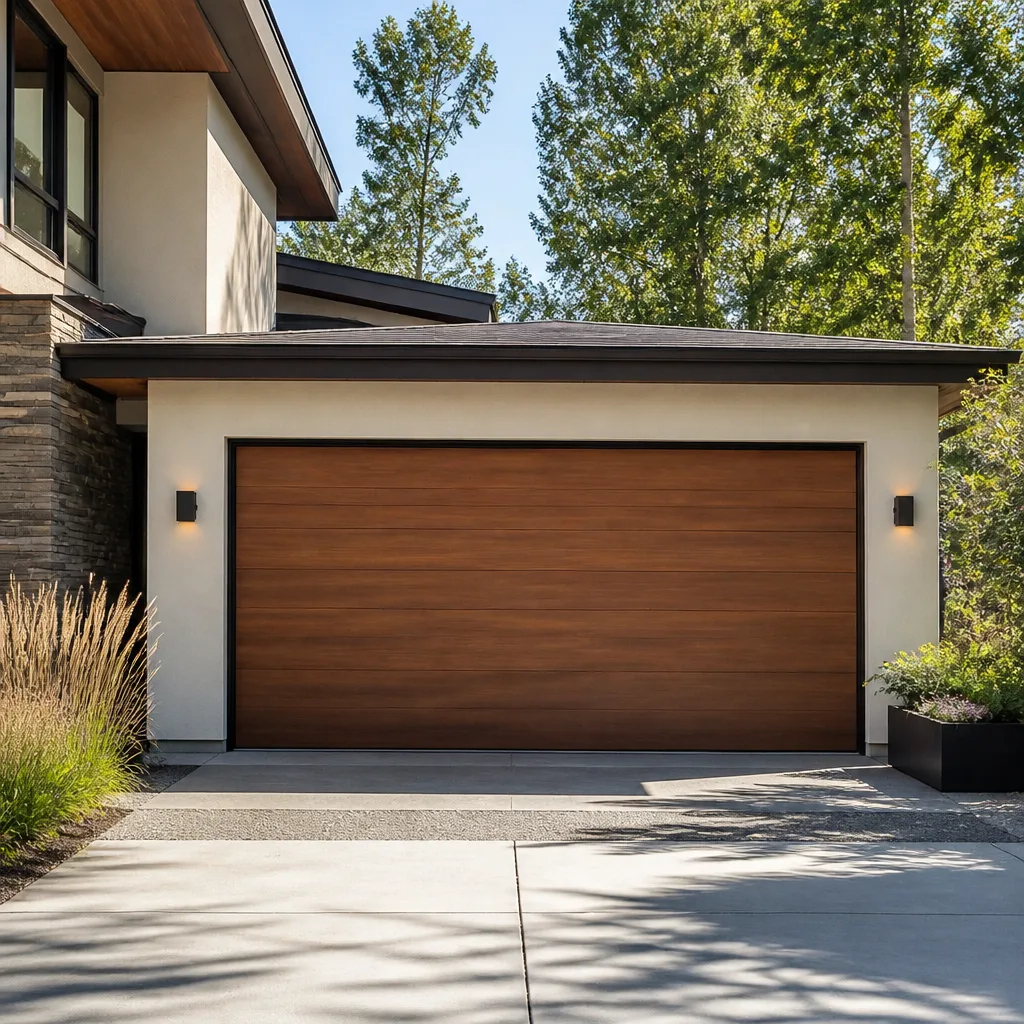 Modern flush
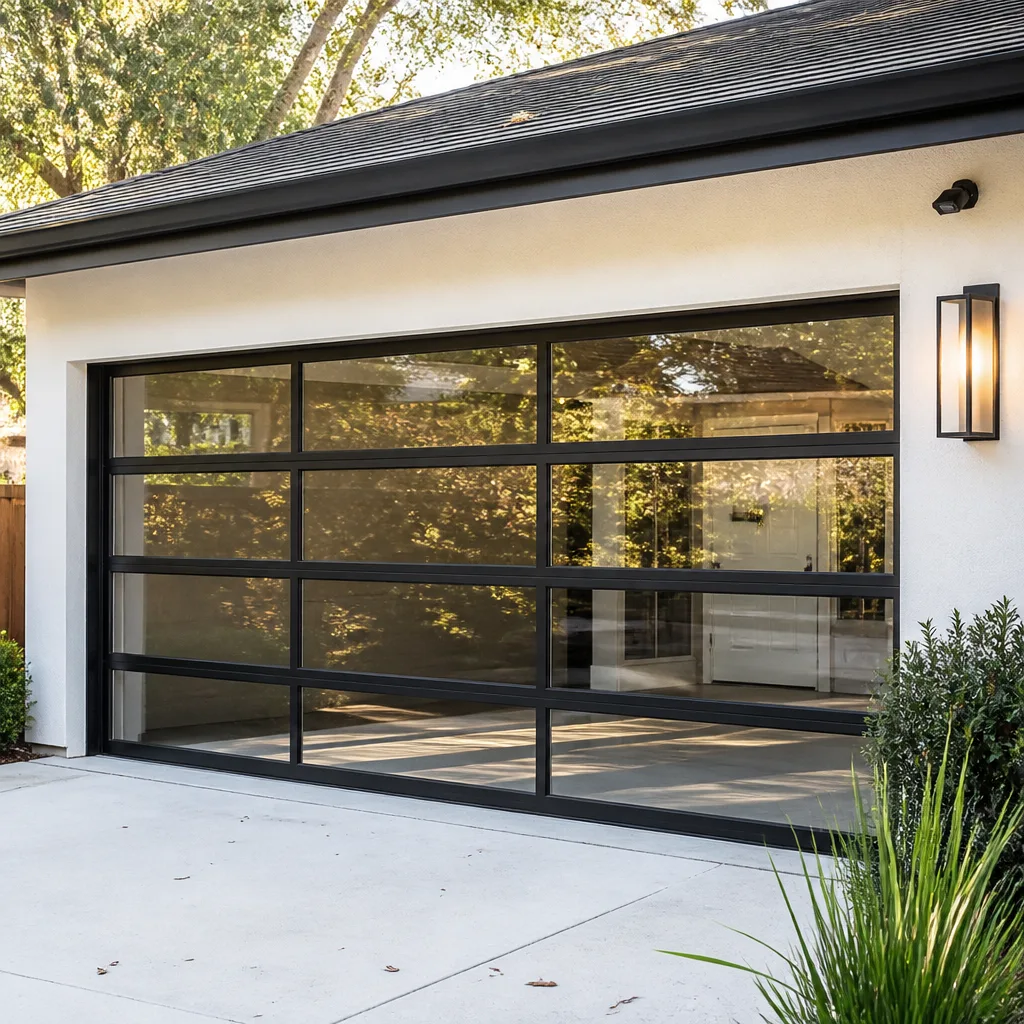 Full-view glass
 LiftMaster openers
 Chamberlain openers
Full 25-point door and opener safety check with every visit - springs, cables, rollers, tracks, and your LiftMaster or Chamberlain opener included
You get a price before we start. It does not change when the pro arrives.
Get your free estimateGarage Door Repair Maintenance Schedule: What to Do and When
A garage door used four times a day completes roughly 1,460 open-close cycles in a year. The torsion spring rated for 10,000 cycles isn’t failing “randomly” at year six. It’s right on schedule, and a tally would have told you so. Most published maintenance schedules ignore this completely. They tell you to lubricate “twice a year” and call it done, which is fine for a door that opens twice a day and misleading for one that opens ten times. In this guide we’ll walk through a schedule built around cycles and seasons instead of arbitrary months, with tasks matched to how homes around Fishers actually use their doors through an Indiana year.
Quick Answer
Garage door maintenance works best when you schedule it by usage and season, not by the calendar alone. A typical residential door needs a five-minute owner check once a month, lubrication every six months (more often if the door cycles more than six times a day), and a professional inspection once a year that covers springs, cables, and balance. In Fishers, the two highest-value tasks are pre-winter lubrication before hard freezes and post-winter cable and track inspection after road salt and grit work their way into the mechanism.
Styles & brands we work with
- Raised-panel steel
- Carriage house
- Modern flush
- Full-view glass
- LiftMaster openers
- Chamberlain openers
Table of Contents
- Why Cycles, Not Months, Set Your Schedule
- The Five-Minute Monthly Check
- Seasonal Maintenance for Fishers Homes
- Which Lubricant Goes Where (and What Never to Use)
- DIY Tasks vs. Professional Inspection Items
- The Annual Professional Inspection
- Opener-Specific Maintenance
- The Repair-or-Replace Decision
Why Cycles, Not Months, Set Your Schedule
Every garage door has a duty cycle, and that cycle determines when parts wear out. Spring manufacturers rate their springs by cycle count, not by years. A standard torsion spring might be rated for 10,000 cycles. A high-cycle spring might be rated for 20,000 or more. The spring doesn’t know or care whether those cycles happen over six years or twelve. What matters is how many times the door went up and down.
This is why two neighbors on the same street in Fishers can have doors installed at the same time and see very different failure timelines. One household leaves at 7am, comes home at 6pm, and uses the door twice. The other has a teenager, a dog walker coming twice a day, and a delivery every afternoon. The second door is on the fast track, even though both are the same age.
Here’s a way to look at it:
- Low-use household (2 cycles/day): roughly 730 cycles a year. A 10,000-cycle spring is not the yearly worry.
- Average household (4 cycles/day): roughly 1,460 cycles a year. Wear items start to show in year four to six.
- High-use household (10+ cycles/day): 3,650 or more cycles a year. Your service intervals should tighten accordingly, and professional inspection becomes a yearly rather than every-other-year proposition.
If you’ve never thought about your door’s cycle count, spend one week counting. It takes no effort, and it changes how you think about every noise the door makes. When you know your door is on a fast track, you start to hear the cues earlier. Our technicians have up to 8 years of experience servicing every system homeowners around Fishers are likely to have, and the stories we hear about failures almost always trace back to wear that was happening for months.
The Five-Minute Monthly Check
Most garage door failures that leave a homeowner stranded or scrambling to find garage door repair are preceded by months of small symptoms. A five-minute check once a month catches the majority of these before they become a real breakdown. Do this on a Sunday morning when nobody is in a hurry.
- Balance test. Pull the manual release cord to disconnect the door from the opener, then lift the door to waist height and let go. A balanced door holds its position. If it drops, the spring tension has changed and a professional should check it.
- Visual cable inspection. Look at both sides of the door with the door closed. Cables should run cleanly, without fraying, kinks, or bird-caging. If any strand looks separated from the bundle, stop using the door and call a specialist.
- Reversal safety test. With the door open, place a piece of wood or a roll of tape on the floor beneath the closing door and press the close button. The door should reverse on contact. If it doesn’t, the safety sensors or opener force limit need attention before you use the door again.
- Visual track check. Look for dents, gaps, or anything leaning against the track. Tracks that shift out of parallel cause roller and hinge wear well before they cause an outright failure.
- Hinge and hardware listen. Stand next to the door while it moves (door not open to the general public, just you). Squeaks, grinding, and popping all mean something specific is happening. The door is telling you.
If any check fails, write down what you observed. That one-line note makes the next call to us more useful. And any spring, cable, or track problem is best looked at by a trained technician because of the tension involved. garage door opener repair is different: the opener side is safer to inspect at the sensor and contact level, though the drive mechanism itself deserves professional attention.
Seasonal Maintenance for Fishers Homes
Indiana’s climate gives a garage door a specific yearly beating. Summer temperatures soften lubricants and humidity settles on the hardware. Fall brings the first cold snap, which is the season that finds weak points. Winter runs long enough that anything that dried out in the fall will fail before spring. And spring brings thaw, rain, and the salt that got into the tracks all winter finally starting to work.
Here’s what we recommend for Fishers households, mapped to the season:
Pre-Winter (October to November)
- Lubricate hinges, rollers, and the torsion spring (more on which products later).
- Check weatherstripping at the bottom of the door and along the sides. Warm-air leaks in winter are a sign the seal is compressed or torn.
- Test the reversal safety function before temperatures drop, when you’re still comfortable standing in the driveway.
Post-Winter (March to April)
- Inspect cables and track after road salt has had months to settle into the rollers and the bottom bracket.
- Wipe down the bottom weather seal and the lower hardware with a damp cloth. Salt residue is the main driver of lower-track corrosion in Fishers.
- Re-test the door’s balance. Cold temperatures tighten every moving part, and springs that were marginal in autumn will read differently now.
Summer (June to August)
- Check weatherstripping for UV degradation: cracking, brittleness, or a chalky film on the surface.
- Listen for squeaks in the rollers. Summer heat drives lubricant out faster than cooler months, and a dry hinge is a hinge on borrowed time.
- Any door facing west or south takes the most UV. If it’s a wood door (Clopay and Amarr both make excellent wood and wood-look doors), check the finish for cracking.
If you want eyes on any of these seasonal items, that’s exactly what our Hillcrest Garage Door Service inspections are for. And if you’re in Fishers, you already know the seasonal swings I’m describing. You don’t need us to explain weather; you need us to tell you which components weather is hard on.
Which Lubricant Goes Where (and What Never to Use)
This is where most published maintenance advice goes wrong in the same way: it says “lubricate the door” and never specifies what to use. The wrong product is worse than no product. Here’s the component-by-component breakdown we give every homeowner.
- Rollers and hinges: silicone spray or a white lithium grease (spray) designed for garage door hardware. Silicone is the safer choice because it doesn’t attract dust, doesn’t gum up in cold, and doesn’t stain.
- Torsion spring: silicone spray only. Never WD-40. WD-40 is a solvent-based product that thins the factory lubricant the spring was manufactured with, and once that happens the spring coils grind against each other with every cycle. The result is accelerated wear that shortens the spring’s life.
- Tracks: no lubricant at all. The wheels roll, the tracks guide. Lubricant in a track is a magnet for dust and grit, and grit is what wears out the rollers.
- Weatherstripping: silicone spray lightly to keep the seal pliable. Not oil, which breaks the rubber down.
- Opener rail (chain or belt-driven): manufacturer-specific lubricant if the manual calls for it. Belt-drive openers from LiftMaster, Chamberlain, and Genie typically need nothing on the belt itself. Chain-drive may need a specific chain lube, and applying the wrong product to a chain is one of the more common homeowner mistakes we see.
Two more rules that make a difference:
- Lubricate with the door closed and the opener disconnected. You want to reach every hinge without the door moving under your hand.
- Wipe off excess. A thin film is what you want. Puddles of spray attract grit.
If a hinge or roller is dry but the door still squeaks, that’s not a lubrication problem. That’s a hardware problem, and hardware problems belong with a specialist. A Wayne Dalton TorqueMaster or a Genie screw-drive system will have its own quirks, and matching the fix to the exact brand and model is what we do.
DIY Tasks vs. Professional Inspection Items
Garage door maintenance splits into two lists, and doing the second one yourself is where homeowners get into trouble. This is the distinction most published schedules fail to make.
Safe for homeowners:
- Monthly balance, cable, reversal, and track visual checks.
- Lubrication of hinges, rollers, spring (with silicone), and weatherstripping.
- Wiping down tracks and lower hardware after winter.
- Testing safety sensors (wave a hand across the beam; the door should reverse).
- Replacing remote batteries and testing wall button function.
- Checking weatherstripping condition and replacing bottom seal if it’s clearly worn.
Professional only:
- Any spring work. Torsion and extension springs carry tension strong enough to cause serious injury, and they must be de-tensioned with specific tools and procedures. We do not recommend homeowners adjust, remove, or replace springs.
- Cable replacement. Cables are under the same tension load and can whip if released improperly.
- Track alignment and adjusting the door’s balance. This is safe enough to test (as above) but not safe to correct without knowing what you’re doing.
- Opener gear, motor, and force-limit adjustment.
- Any hardware on a door that doesn’t move smoothly after lubrication.
The line is clear: if the task involves tension, the risk isn’t worth it. Everything else, we’re happy to have you do and happy to skip.
The Annual Professional Inspection
A yearly professional inspection is not the same as your monthly check scaled up. It’s an hour of eyes on components that most homeowners can’t see, and a systematic review of the whole system from springs to sensors. Here’s what it covers.
- Spring cycle assessment. Visual and functional check of the torsion or extension springs, with attention to any small gaps, rust, or sagging that suggest nearing end-of-life. The technician knows the cycle rating for the spring on your door and can advise how much life is left.
- Cable and drum inspection. Full length check of both cables, plus the drums and center bearing plate. This is where a professional catches cable wear long before it becomes a snap.
- Roller condition. Rollers wear on the inside of the wheel before they show obvious symptoms. A trained eye can tell you which rollers to replace and which are still on track.
- Hinge and hardware tightening. Loose hinge screws are common after a few winters and are easy to miss.
- Track alignment. Laser-level and physical check for parallel alignment and proper pitch.
- Balance and force-limit calibration. The door’s force trip point is a safety feature, not a performance setting, and it should be verified.
- Opener inspection. Motor, gearing, drive system, safety sensors, and wall button function. Any smart-control feature is tested too, since a LiftMaster MyQ or a Chamberlain equivalent is only as good as its sensor signal.
- Weatherstripping and bottom seal. Both sides plus bottom, with a note on any that are compressed, torn, or UV-damaged.
For Fishers households, we recommend this inspection once a year, timed for early fall. Fall is the ideal month because it lets you address pre-winter wear while the weather is still on your side. If your door is on a high-cycle schedule, the inspection is still once a year, but the lubrication intervals inside the year are tighter. Our technicians have up to 8 years of experience on the exact door and opener brands you’re likely to have, and matching the recommendation to a specific Clopay, Amarr, Genie, or Chamberlain system is what makes the inspection useful rather than generic.
Opener-Specific Maintenance
The opener is a separate system from the door, and it needs its own maintenance schedule. Most of the schedule is automated by the opener itself, but a few checks are worth doing around the door’s monthly cycle.
- Remote battery replacement: once a year, or as soon as you notice reduced range. A weak battery is the most common cause of “my remote doesn’t work.”
- Safety sensor alignment: the sensors on either side of the door miss because they’ve been bumped, not because they failed. Check alignment monthly by waving a hand through the beam.
- Force limit: if the door reverses halfway up or stops short on the way down outside of the safety sensor test, the force limit likely needs adjusting. That’s a professional task.
- Drive rail lube: chain-driven openers built by LiftMaster, Chamberlain, Genie, or Craftsman can benefit from the manufacturer’s recommended chain lubricant. Belt-driven models usually need nothing. Screw-drive (common on some Genie models) also needs nothing on the threaded rod.
- Smart feature test: if you’re on a LiftMaster or Chamberlain MyQ-type setup, test the app-based control once a month. An internet or router change can silently break the connection, and the only way to know is to test.
When the opener fails, the failure has a specific signature. A loud grinding or knocking suggests gear wear. A door that opens fine but won’t close suggests sensor or force-limit issues. A remote that works but the wall button doesn’t suggests wiring or the logic board. In our experience, the opener is the component most often misdiagnosed because a homeowner assumes the whole system is failing when only one part of it needs work.
The Repair-or-Replace Decision
Eventually maintenance gets expensive, and the question shifts from “what to fix” to “should I replace.” The honest answer is usually not “replace,” but there are clear signals that it’s time.
- Replacement makes sense when: the door has two or more structural problems (a bent panel plus a failed spring plus a worn track, for example), or the door is a model with parts no longer available from Clopay, Amarr, Wayne Dalton, or another manufacturer. A specialist can check parts availability for your exact model.
- Replacement makes sense when: the opener is failing every few years and the door was installed at the same time. Matched systems age together, and replacing one usually means the other follows.
- Repair is the better path when: the door structure is sound, the hardware is failing from wear, and the opener is healthy. A new spring and a set of rollers is a much smaller investment than a full installation.
- Repair is the better path when: the door is a quality model with a long remainder of usable life. Modern doors are often not built to a higher standard than a solid door from a decade ago, and there’s no need to replace a good one.
Here’s how we decide, as a specialist rather than an upseller: we look at what’s actually failing, how many items are failing at once, and whether the door and opener are aging on the same timeline. If a repair costs a third of a replacement and the door has many years left, we’ll tell you that. If the door is near the end of its structural life, we’ll tell you that too. Getting it working right is the goal, and sometimes working right means a new door.
Common Mistakes to Avoid
- Lubricating the tracks. It feels proactive. It’s the opposite: the tracks are meant to be dry, and lubricant in a track accelerates roller wear by capturing every particle of grit that touches it. In Fishers, that grit includes winter road salt.
- Using WD-40 on the torsion spring. It’s the single most common product mistake we see. WD-40 is a solvent that strips the factory lubricant off the coils, and once it’s gone the spring wears faster with every cycle.
- Scheduling maintenance by “spring and fall” regardless of use. A high-cycle household on a twice-a-year schedule is under-maintained by half. Count your cycles and adjust.
- Ignoring the reversal test because the door still closes. The reverse function is a safety feature. A door that closes without reversing on contact has a malfunctioning sensor or force limit, and that can become a serious problem.
- Assuming all hinges need the same lubricant. Some hinges on a door close to Lake Michigan’s humidity patterns need more frequent attention than others, and interior vs. exterior hinges wear differently. Lubricant type stays the same, interval doesn’t.
- Replacing one roller at a time. Rollers usually wear as a matched set. Replacing one leaves the rest on the same wear timeline, and you’ll be back at it in a few months.
- Skipping the post-winter check. Road salt from the winter roads is the number-one cause of premature lower-hardware failure in central Indiana. A spring wipe-down and a cable inspection in March prevents an April failure.
See the difference
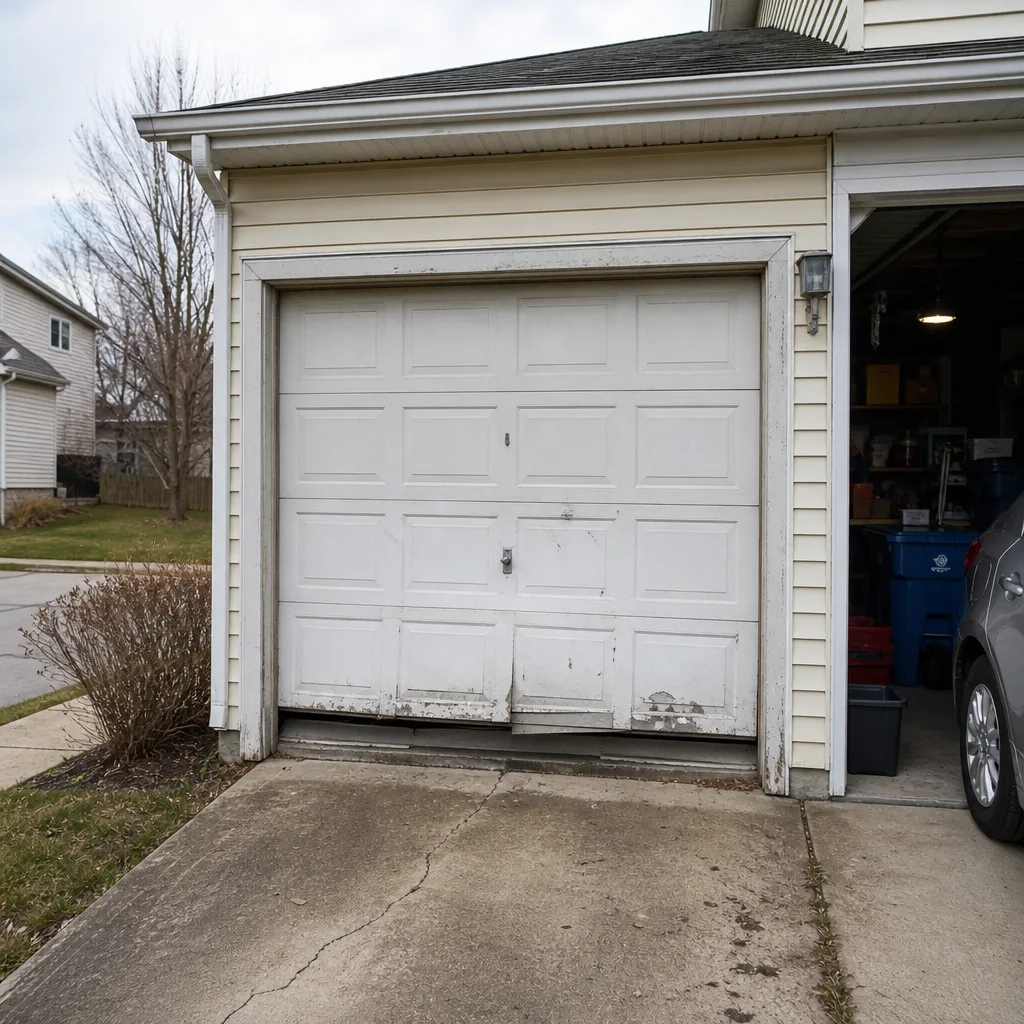 Before
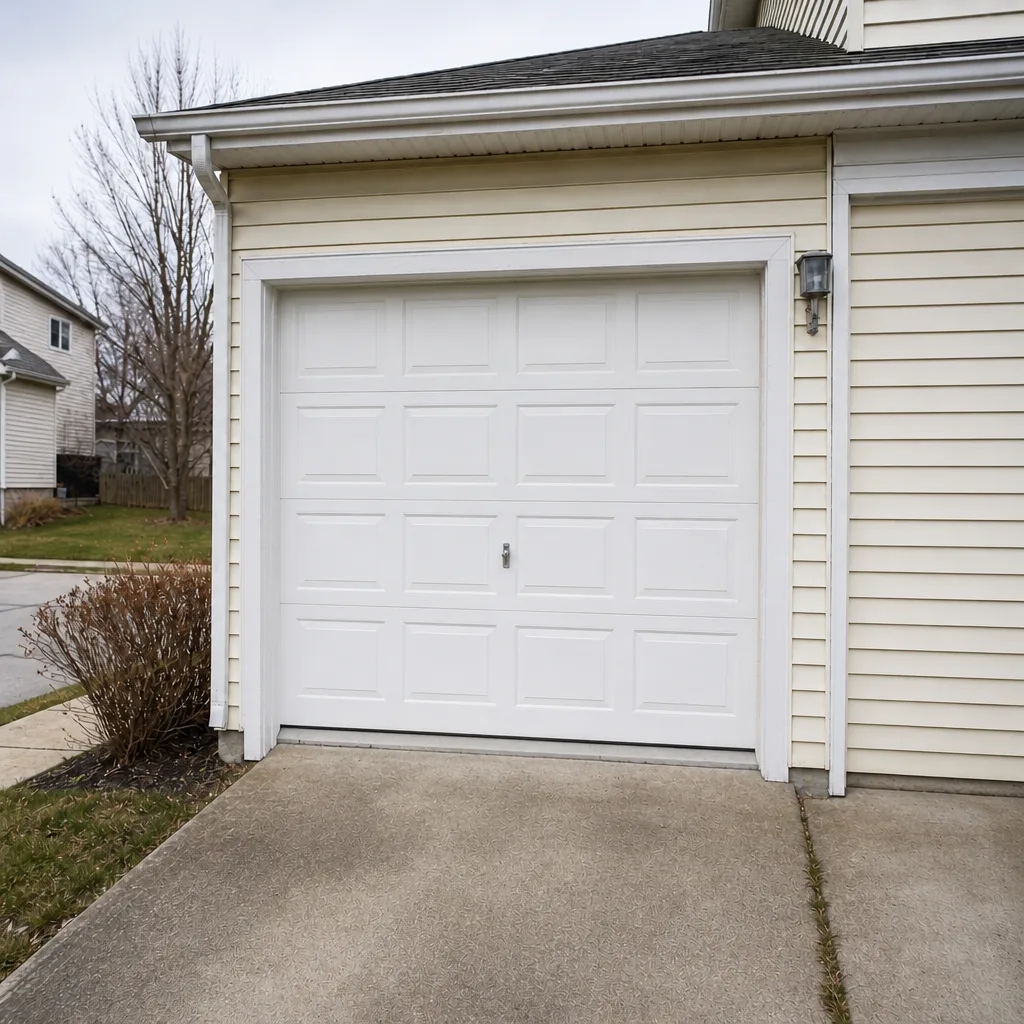 After
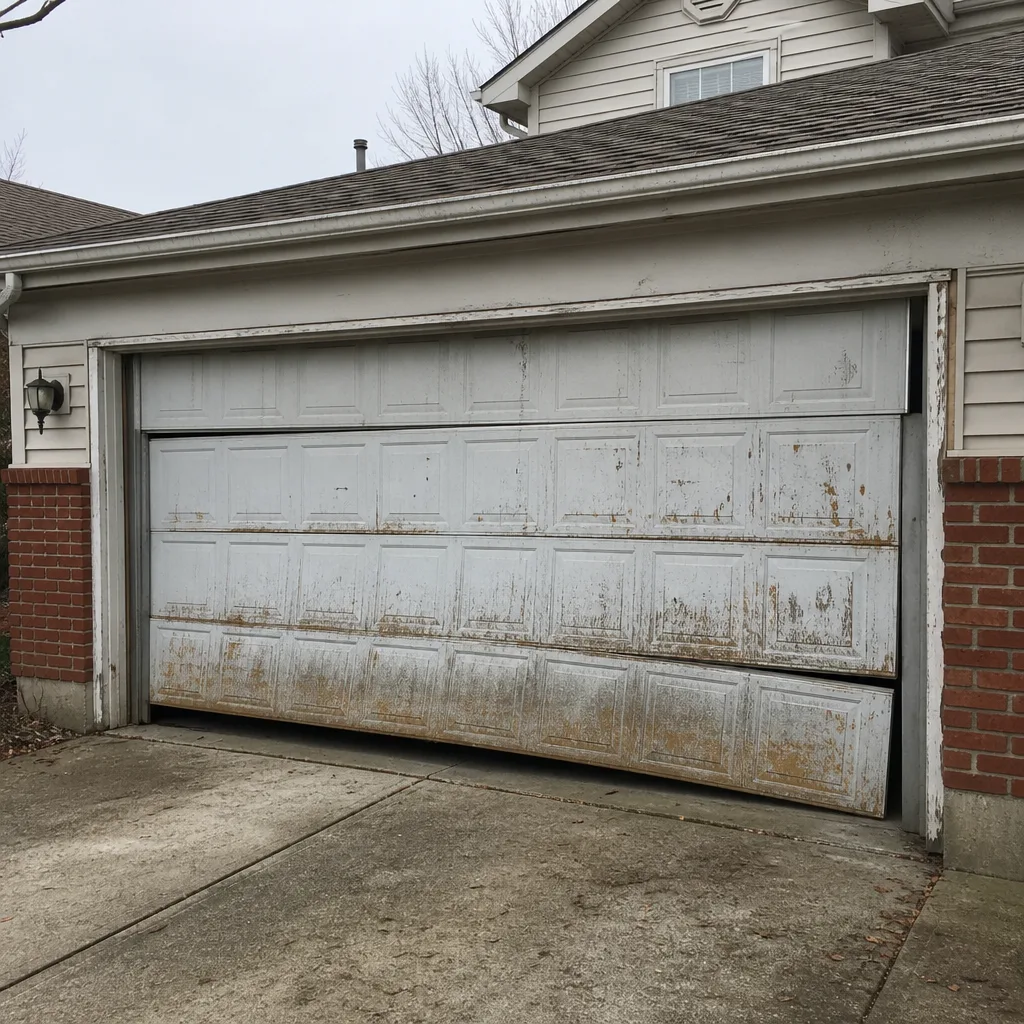 Before
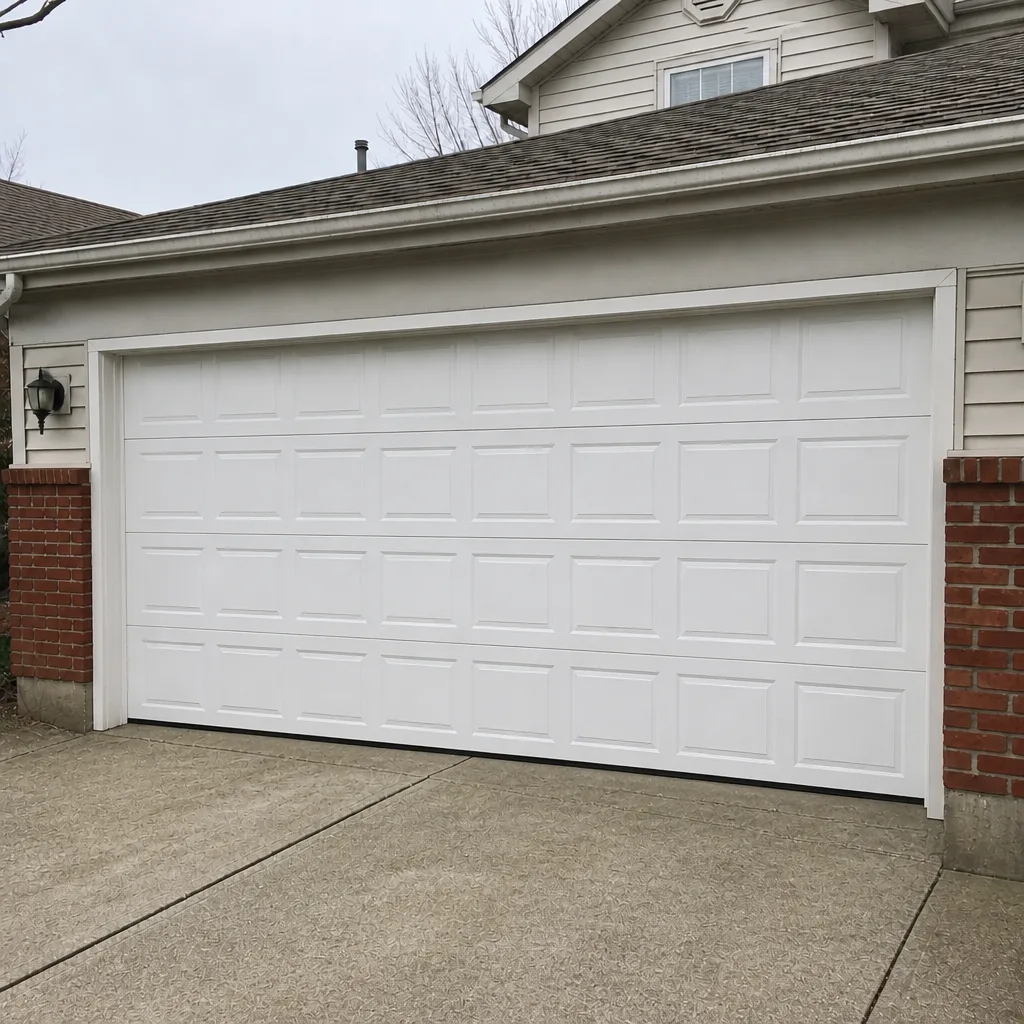 After
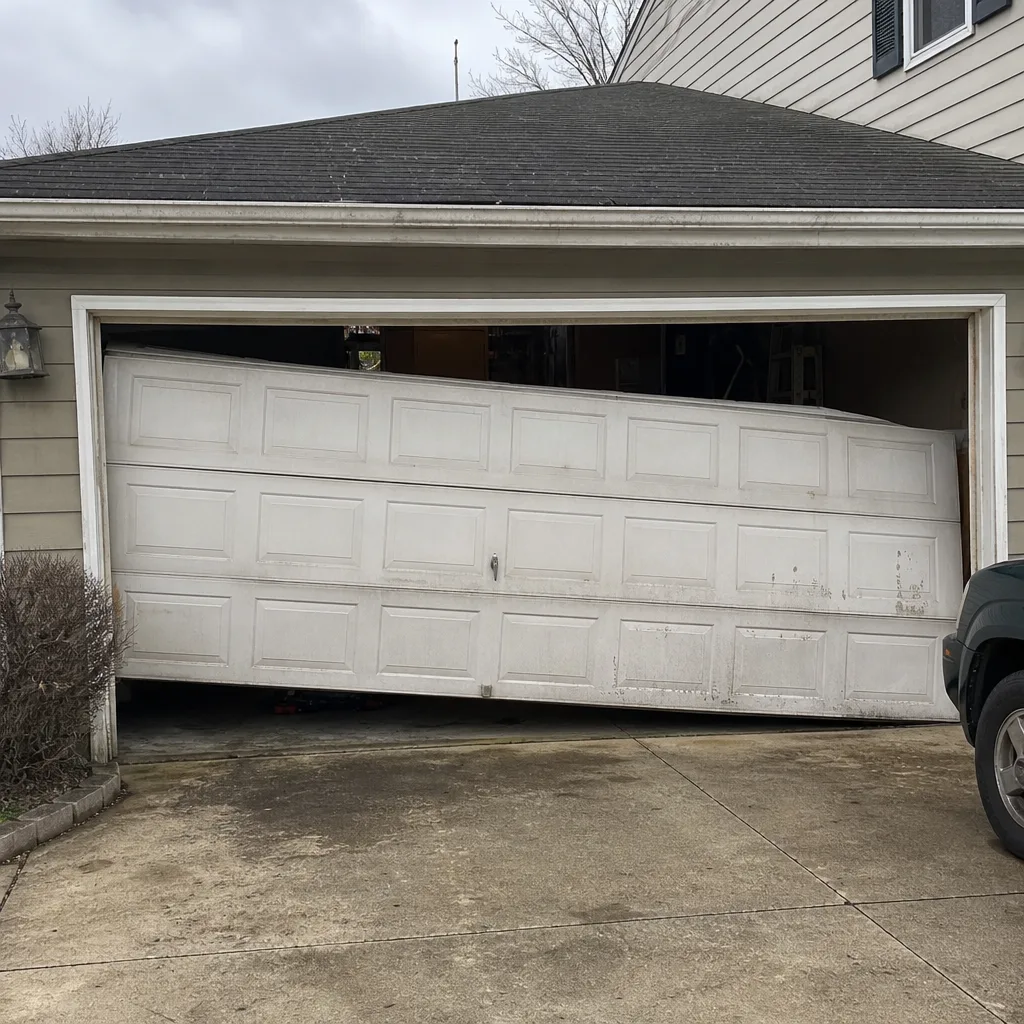 Before
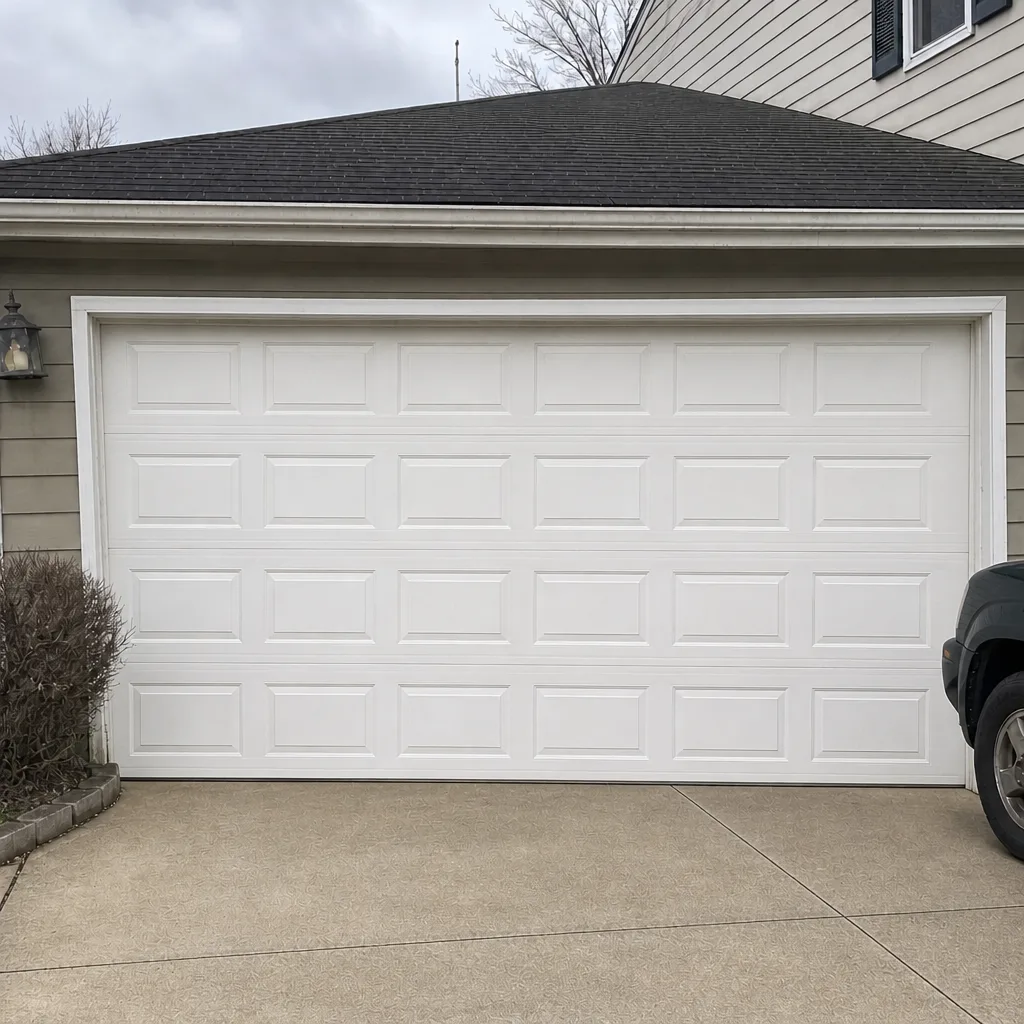 After
When to Call a Professional
Some garage door problems are maintenance. Some are repair. The trick is understanding where the line sits. Call a professional immediately if any of these are true:
- A spring is broken, sagging, or has an obvious gap in the coil. Do not attempt to open the door more than necessary. This is a serious safety issue.
- A cable is frayed, kinked, or has strands separated from the bundle.
- The door is off its tracks, tilted, or has visibly warped panels.
- The reversal safety test fails repeatedly after adjusting nothing.
- The opener is grinding, thumping, or has stopped responding to the wall button.
- The door is unusually difficult to lift by hand (with the opener disconnected).
- Lubrication and hinge tightening haven’t fixed the noise or the resistance.
Hillcrest Garage Door Service offers free estimates in Fishers – call (866) 810-7496. We answer 24/7. Fast dispatch from 7am to 7pm, Sunday through Friday. We work on the whole system, door and opener together, so you’re not calling two companies for one problem. And if a repair is the right call, we’ll say so. If it’s the wrong call and you’d be better served by a replacement, we’ll tell you that too.
Frequently Asked Questions
Every six months is the standard for a door used two to four times a day, and every three months for a high-cycle household. Lubrication means silicone spray on hinges, rollers, and the torsion spring, with nothing applied to the tracks. Post-winter and pre-winter are the two ideal times in central Indiana because they bracket the season when temperature swings do the most damage. Call (866) 810-7496 if you’re not sure which components on your system need it.
The five-minute check covers the balance test, visual cable inspection, reversal safety test, track check, and a listen to the door in motion. It’s designed for a homeowner to complete without tools or opening any component. If any of the five steps reads wrong, that’s your cue to book an inspection. Call (866) 810-7496 for an exact quote on any repair found – estimates are free.
No. Torsion and extension springs are under enough tension to cause serious injury, and they must be de-tensioned with specific tools before any adjustment or removal. This is the one task we tell every homeowner to leave to a technician, without exception. If you suspect a spring problem, stop using the door and call (866) 810-7496.
Indiana winters are hard on the lower half of the door. Road salt that gets tracked into the garage works its way onto the cables, rollers, and bottom bracket, and the freeze-thaw cycle stresses every moving part. That’s why post-winter cable and track inspection is a fixed item on the schedule for Fishers households, not an optional one. Pre-winter lubrication matters just as much because it puts a protective film on the hardware before temperatures drop below freezing.
Yes, and the two serve different purposes. The monthly check catches visible problems you can safely see, and the annual inspection covers springs under load, cable drums, rollers, balance calibration, and force-limit settings. In our experience, most serious failures start with something on the annual list that the monthly check can’t reach. An annual visit timed for early fall is what keeps a door ahead of winter. Call (866) 810-7496 to schedule one.
No. The price is quoted and agreed before any work starts, and the written estimate sets the final price. We inspect first, then quote. Work begins only after you approve that number. Call (866) 810-7496 for an exact quote – estimates are free.
Yes. The professionals we connect you with are licensed and insured, and our technicians have up to 8 years of experience across the major door and opener brands. Every job is set by a written estimate, and the price that estimate sets is the price you pay. Call (866) 810-7496 with any question about the work.
We don’t sell maintenance plans. Our work is set per job by a written estimate, and scheduling your own annual inspection each fall is the simplest approach. Call (866) 810-7496 to book one, and we’ll walk through what your specific door and opener need.
The Bottom Line
A garage door maintenance schedule isn’t a calendar. It’s a rhythm set by your door’s cycles, the seasonal weight of a central Indiana year, and the specific brand and model of the door and opener in your home. Do the five-minute monthly check. Lubricate at the right intervals with the right products. Inspect cables and tracks after every winter. Book an annual professional visit in early fall, and you’ll be ahead of nearly every failure we see. If something doesn’t feel right, call us. Getting it working right is the goal, and our specialists are set up for repair, opener repair, and installation under one roof. Written by the team at Hillcrest Garage Door Service.
Written by the team at Hillcrest Garage Door Service.